In 2026, global buyers can choose from several Round Bathtub types, from compact soaking tubs to spacious freestanding designs. Each option changes how a bathroom feels and functions. A sculptural tub can become the room’s focal point. A built-in model may make better use of limited floor space. The right choice depends on more than appearance. Room dimensions, doorway clearance, floor support, water capacity, and drain placement all affect a successful installation.
This guide introduces the main styles and materials buyers are likely to compare, including acrylic, stone resin, and other commonly available finishes. It also explains practical differences between freestanding, drop-in, and deeper soaking designs. Look closely at product specifications. Check the tub’s outer and inner dimensions, empty weight, overflow details, and recommended installation method. Ask suppliers for clear documentation, warranty terms, and care instructions, then confirm plumbing and structural requirements with a qualified local installer. Small details matter.
A product photograph cannot show everything. Surface texture, edge height, and the feel of getting in and out may be hard to judge remotely. That makes comparison imperfect, and buyers should allow time for questions. Global shipping can also affect packaging, delivery access, and replacement-part planning. There is no single best Round Bathtub for every home. The following overview helps buyers weigh comfort, design, installation needs, and long-term upkeep before selecting a model.
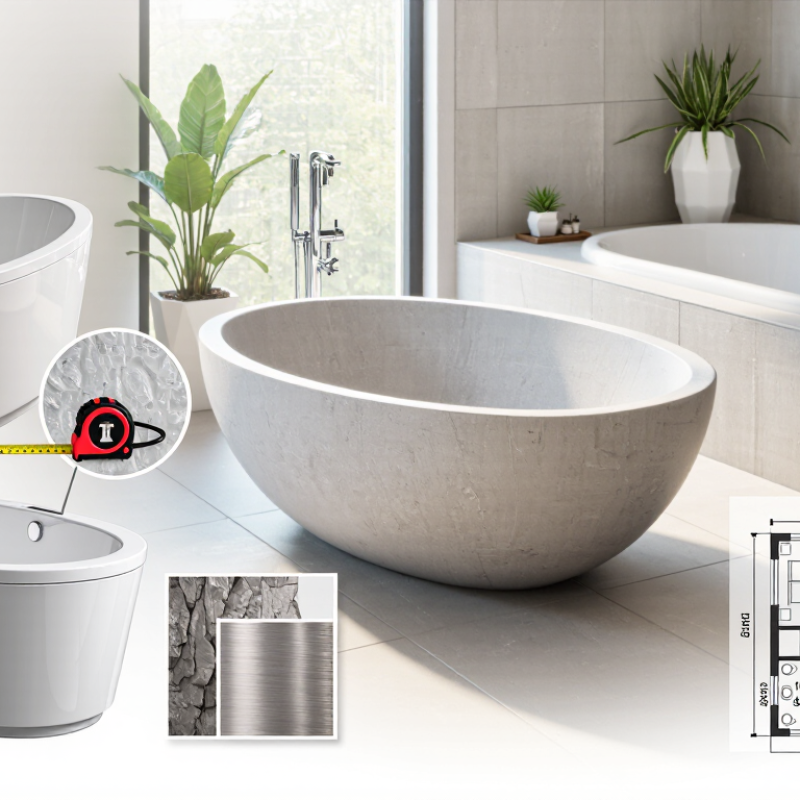
A round bathtub is defined by its circular or near-circular footprint, not by one standard size or installation style. It may sit freestanding, drop into a platform, or be built into a wet room. The curved rim softens a bathroom’s layout and can make bathing feel more open. Some models suit one bather; wider designs allow two, depending on interior dimensions and water depth. Check the usable basin, not just the outside diameter.
The shape changes how the room works. A freestanding tub needs clear space around its rim for cleaning and safe entry, while a built-in version can share a deck with toiletries. The drain position, floor strength, filled weight, and route through doorways all deserve attention before purchase. Small details matter. A broad rim may be useful for a towel, but can reduce standing space.
Water use needs a practical check. The U.S. EPA WaterSense showerhead specification sets a 2.0-gallon-per-minute limit for labeled models; the federal showerhead standard is 2.5 gallons per minute. These figures describe showers, not bathtub capacity, so compare them carefully. Ask suppliers for the tub’s fill volume at the intended bathing depth. A deep round basin may look inviting, yet it can use more water than expected. That trade-off is easy to overlook.
Round bathtubs are installed in three main ways: freestanding, deck-mounted, and recessed or sunken. Freestanding models sit exposed on the floor, making their curved shell a focal point. They need finished flooring beneath them and accessible plumbing. Deck-mounted tubs drop into a raised platform, with the rim resting on a tiled or stone surround. This approach offers a ledge for toiletries, but the platform takes up floor space. Recessed designs sit lower in a built platform or floor cavity. They create a quieter profile, though access for repairs needs careful planning.
The 2024 Houzz U.S. Bathroom Trends Study reports that 24% of renovating homeowners upgraded their bathtub. That figure reflects renovation choices, not a preference for round shapes or a particular installation. Still, it signals that tubs remain part of bathroom planning. Before choosing, check the tub’s outer diameter, filled weight, drain position, and route through doorways. A round tub can look compact in a showroom and feel oversized beside a vanity. That mismatch happens.
Tips: Ask the installer to mark the tub’s footprint on the floor with tape. Check standing and entry space, then confirm floor support and service-panel access. For deck-mounted or sunken tubs, settle the platform height early; a small change can affect step comfort and plumbing access. Houzz Research, 2024 U.S. Bathroom Trends Study.
Common installation configurations for round bathtubs. Each bar represents one available configuration; this chart does not show market share or popularity.
Quick guide: Freestanding tubs sit independently on the floor. Drop-in tubs are set into a surrounding deck, while undermount tubs are installed beneath a deck surface. Platform-mounted tubs sit on a raised platform. Confirm the tub model’s installation requirements, floor support, plumbing access, and available space before choosing.
Round bathtub material affects heat feel, weight, cost, and installation.
Engineering ToolBox’s thermal-conductivity reference tables list cast iron at roughly 55 W/m·K and PMMA acrylic near 0.2 W/m·K. These are material-level figures, not whole-tub test results. In practice, cast iron pulls heat from bathwater quickly unless its construction or installation limits heat loss.
Acrylic feels warmer to the touch and is easier to carry upstairs. It can also flex if its support is poor. Small details matter.
Enameled steel is lighter than cast iron, but its thin shell can feel cool and sound hollow when tapped. Acrylic is easy to shape into a deep, compact round basin, though scratches may show under strong bathroom lighting.
Stone-resin and solid-surface tubs feel substantial; check the product’s actual weight before planning delivery or floor support.
ASTM C177 describes a guarded-hot-plate method for measuring thermal transmission, but flat-sample results cannot fully predict a curved, insulated bathtub. That distinction is easy to miss. Ask suppliers for wall thickness, dry weight, and test conditions, not just claims about heat retention. Even then, those details do not tell the whole story.
Round bathtubs can soften a large bathroom, but their curved outline needs careful planning. A freestanding round tub works well in an open room where people can walk around it. It becomes a focal point beside a window or beneath a simple pendant light. Its rounded rim also takes more floor space than a similarly sized rectangular tub. Measure the walking path, not just the tub footprint.
For tighter rooms, a built-in circular tub can sit within a raised platform or a broad corner deck. This saves visual clutter, though the deck still needs room and may make cleaning harder. A deep soaking-style round tub suits a compact bathroom when height matters more than length. Check the entry step and access to controls before choosing. A floor plan can look generous on paper and feel cramped in person. Measure twice.
Tips: Mark the tub’s full diameter on the floor with tape. Check door clearance, plumbing access, and the filled tub’s load with a qualified installer. Then consider whether the curved shape leaves enough room for towels and daily movement.
Start with the room, not the product photo. Measure the available floor area, doorway, and route into the bathroom. A round tub can look compact online but require generous clearance once installed. Check its filled weight against the floor’s capacity, especially in upper-level rooms. Compare internal bathing depth and water capacity, too. A deep model may feel relaxing, yet use more hot water than expected. Small detail, big difference.
Then compare materials, insulation, and cleaning needs. Acrylic is relatively light, while mineral-based materials often feel heavier and more substantial. Ask for the empty weight, wall thickness, and care instructions rather than relying on finish names alone. Check drain position, overflow design, and whether the plumbing can match the room layout. These details vary by model. Request dimensioned drawings and confirm them with a local installer before ordering, since plumbing standards and available fittings differ between markets. One thing is easy to overlook: a glossy surface may show water spots more clearly under strong bathroom lighting. If possible, inspect a finish sample in similar light. And leave some room for uncertainty; installation conditions can differ from the plans.
Its footprint is circular or nearly circular. It may stand alone, sit in a deck, or be recessed. The usable basin matters more than the outside diameter.
Some wider models can, but capacity depends on the basin’s interior dimensions and water depth. Check those measurements before deciding. Looks can mislead.
Common options include freestanding, deck-mounted, and recessed designs. Freestanding tubs need finished flooring and accessible plumbing. Decks add a ledge but use floor space.
Mark its footprint on the floor with tape. Leave room for entry, cleaning, and nearby fixtures. Measure the doorway route, too. Measure twice.
Confirm the filled weight, floor support, and drain position with the installer. Stone-resin and solid-surface tubs can be especially heavy. Delivery access matters.
Acrylic often feels warmer to the touch and is easier to carry. Cast iron is heavier and may draw heat from the water. Construction affects performance, too.
It can, especially if the basin is deep. Ask for its fill volume at your intended bathing depth. A showroom view cannot show water use.
Keep plumbing reachable through an access panel or another service route. Recessed and deck-mounted tubs need careful planning. Repairs can be awkward otherwise.
A Round Bathtub is defined by its circular form, which creates a spacious, comfortable bathing area and can serve as a striking focal point. Depending on the bathroom layout and plumbing, it may be installed as a freestanding, built-in, or drop-in model. Each option offers a different balance of visual impact, accessibility, and installation requirements.
Material choices influence durability, weight, maintenance, heat retention, and cost, while designs range from compact styles for smaller rooms to larger statement pieces for open spaces. Before choosing, global buyers should compare dimensions, capacity, material quality, installation needs, water use, care requirements, and compatibility with local bathroom layouts. Considering both practical needs and design preferences helps ensure the bathtub fits the space and provides lasting comfort.

Kaifeng