2026 Top Acrylic Bathtub Types for Global Buyers

Time:2026-10-22 Author:Madeline
0%

Acrylic Bathtub design is changing quickly as global buyers seek comfort, efficient installation, and dependable value. In 2026, the market includes freestanding, alcove, corner, drop-in, and whirlpool models. Each type serves a different bathroom layout. Each also creates different shipping, cleaning, and installation demands.

David Kohler, a recognized bathroom industry leader, has described the bathroom as “a place of refuge, a place to relax and rejuvenate.” That idea helps explain the growing appeal of acrylic baths. Smooth surfaces, warm-touch insulation, and flexible shapes can turn a cold room into a calmer space. Still, appearance should not lead every decision. A dramatic freestanding Acrylic Bathtub may need reinforced flooring and more plumbing access. An alcove model may waste less space, but it can look less distinctive.

This guide compares the top Acrylic Bathtub types for international buyers in 2026. It considers material thickness, surface finish, water retention, installation limits, packaging, and after-sales support. Regional preferences matter. A compact corner bath may suit urban apartments in Europe, while a deeper soaking model may perform better in North American homes. Local water conditions also deserve attention. Hard water can expose weak finishes over time.

Some categories overlap.

That is worth admitting.

Product labels are not always consistent across markets. Buyers should verify dimensions, drain positions, certification documents, and replacement-part availability before ordering. The best choice is rarely the most fashionable one. It is the bathtub that fits the room, the user, and the supplier’s real capabilities.
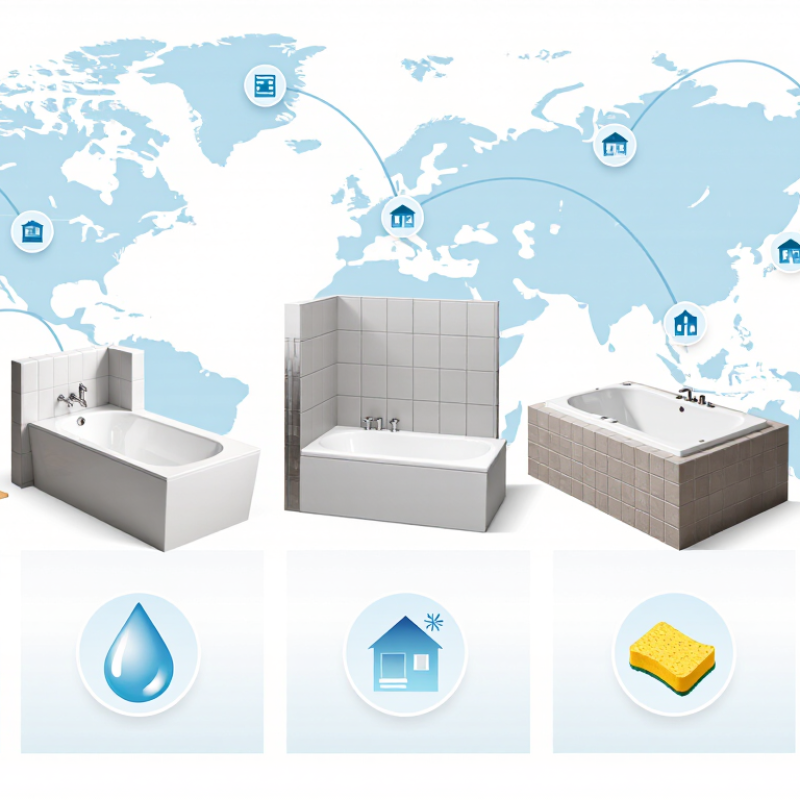
2026 Top Acrylic Bathtub Types for Global Buyers

Acrylic Bathtub Basics and Key Features for Global Buyers

Acrylic bathtubs are popular with global buyers because they are lightweight, warm to the touch, and easy to clean.

Common types include freestanding, alcove, corner, drop-in, and whirlpool models.

Freestanding tubs suit spacious bathrooms, while alcove designs save wall space. Corner units can improve difficult layouts. Drop-in tubs offer flexible deck styling, but installation usually needs more planning.

A reliable acrylic bathtub should have a smooth, even surface without waves, pinholes, or color differences. Many models use reinforced acrylic with fiberglass or another supporting layer. Buyers should check the sheet thickness, base structure, drain position, overflow design, and maximum load. These details vary by manufacturer and market.

I have seen attractive tubs fail because the floor support was ignored. The tub looked perfect. The installation was not.

Tips:

Measure the doorway, bathroom, and plumbing points before ordering. Confirm whether the drain kit matches local connections. Ask for packaging details and inspection photos. A strong carton, corner protection, and stable internal supports reduce transport damage.

Also check cleaning guidance, warranty terms, replacement parts, and applicable safety standards. Whirlpool models need extra attention to pump access and electrical installation.

Not every feature improves daily use. Sometimes, a simpler tub is easier to maintain and more dependable.

Freestanding, Alcove, Corner, and Drop-In Acrylic Bathtub Types

2026 Top Acrylic Bathtub Types for Global Buyers

Freestanding, alcove, corner, and drop-in acrylic bathtubs serve different bathroom layouts. Freestanding models create a strong focal point and suit larger rooms with visible plumbing. Their smooth acrylic shells are lightweight, warm to the touch, and easier to handle than many stone alternatives. The Allied Market Research bathtub report valued the global market at about USD 8.5 billion in 2021 and forecasts continued growth through 2031. Design appeal remains important, but installation access often decides the final purchase.

Alcove bathtubs fit between three walls and support practical family bathrooms. They usually simplify waterproofing and allow a shower screen or curtain. Corner models save floor space, especially in compact apartments, although their triangular footprint can reduce shoulder room. Drop-in tubs sit inside a framed deck, creating a clean edge for toiletries and maintenance access. The Houzz 2024 Bathroom Trends Study shows that homeowners continue investing in upgraded bathroom features, yet available space and renovation budgets still control choices. A larger tub is not always better.

Check acrylic thickness, reinforcement, waste location, and load support before ordering. Ask for dimensional drawings. Small measurement errors can delay installation. Regional plumbing standards also differ, so one specification cannot serve every market reliably. Surface quality matters, but practical access matters more.

Acrylic Bathtub Styles for Different Bathroom Sizes and Layouts

2026 Top Acrylic Bathtub Types for Global Buyers

Acrylic bathtubs suit many bathroom layouts because they are light, warm, and easier to install than cast iron. For compact bathrooms, a 1400–1500 mm alcove tub can sit between three walls, preserving space for a narrow vanity. A 1600–1700 mm model works better in standard family bathrooms. Corner tubs can use awkward angles, but their wider footprint may reduce walking space.

In open bathrooms, a freestanding acrylic tub creates a clear focal point. It needs finished flooring underneath and enough clearance around the rim. The National Kitchen & Bath Association recommends planning comfortable access beside bathing fixtures, not simply filling every available gap. Houzz’s 2024 U.S. Bathroom Trends Study also shows that homeowners continue investing in more functional, spa-like bathrooms. However, “spa-like” does not always mean oversized. A large tub may look impressive but remain uncomfortable for shorter users.

Tips: Measure doorways, stair turns, and service routes before ordering. Leave space for plumbing access. Check the tub’s internal length, not only its external size. Acrylic can flex if the base is poorly supported. This detail is easy to miss. A qualified installer should verify floor loading, waste positions, and local safety requirements. Product dimensions can vary slightly, so a final site measurement still matters.

2026 Top Acrylic Bathtub Types for Global Buyers - Acrylic Bathtub Styles for Different Bathroom Sizes and Layouts

Typical dimensions are shown in centimetres; actual product specifications may vary by manufacturer and local installation standards.
Acrylic Bathtub Type Typical Size Range
(L × W × H)
Recommended Bathroom Size Best Layout or Position Common User Capacity Main Advantages Key Planning Considerations
Alcove Bathtub 140–180 × 70–80 × 50–60 Small to medium bathrooms Against three finished walls, usually with a shower above 1 person Space-efficient; easy to combine with a shower; practical for family bathrooms Confirm wall-to-wall clearance, apron dimensions, drain location and shower waterproofing.
Back-to-Wall Freestanding Bathtub 150–180 × 70–85 × 55–65 Medium bathrooms Long side positioned close to a wall 1 person Freestanding appearance with reduced cleaning space and plumbing complexity Leave access for cleaning and maintenance; check the finished wall and floor are level.
Drop-In Bathtub 150–180 × 75–90 × 50–60 Medium to large bathrooms Set into a deck, platform or tiled surround 1 person; selected wide models may fit 2 Flexible deck design; useful for storage and integrated fittings The supporting frame must carry the filled-bath load; provide a removable service panel.
Corner Bathtub 140–170 × 140–170 × 55–65 Medium to large bathrooms Installed in a 90-degree corner 1–2 people, depending on interior width Uses a corner zone and can provide a wide bathing area Measure both wall lengths and door swing; corner models often require more floor area than expected.
Oval Freestanding Bathtub 150–180 × 70–85 × 55–65 Medium to large bathrooms Centered in the room or placed near a feature wall 1 person Soft visual profile; comfortable reclining shape; strong focal point Allow practical circulation around the tub and coordinate floor-mounted or wall-mounted faucets.
Slipper Bathtub 150–180 × 70–85 × 65–80 Medium to large bathrooms Freestanding, with the raised end away from the main traffic route 1 person Higher backrest supports a deeper, more relaxed bathing posture Check the overall height against windows, wall finishes and faucet reach.
Compact Japanese-Style Soaking Tub 100–140 × 65–80 × 60–75 Small bathrooms and wet rooms Against a wall or within a compact bathing zone 1 person Short footprint with greater bathing depth; suitable for seated soaking A deeper tub may require a raised entry step, grab bar and careful overflow planning.
Accessible Walk-In Bathtub 100–150 × 65–85 × 95–115 Medium bathrooms designed for accessibility Against a wall with clear approach space at the door 1 person Low-threshold entry, built-in seating and improved bathing access Allow the door to open fully; provide slip-resistant flooring, grab bars and adequate drainage.
Two-Person Acrylic Bathtub 170–200 × 80–100 × 55–70 Large bathrooms and master suites Central, corner or wide wall-side installation 2 people Spacious interior; suitable for shared bathing and luxury layouts Verify filled weight, floor loading, hot-water capacity and sufficient circulation space.

Material Quality, Manufacturing Standards, and Certification Requirements

2026 Top Acrylic Bathtub Types for Global Buyers

Material quality should lead every 2026 bathtub evaluation. A 2024 Fortune Business Insights report valued the global bathtub market at about USD 9 billion in 2023. Demand is growing, but cheaper products are also spreading. That creates problems.

Look for sanitary-grade PMMA acrylic with consistent color and a smooth, non-porous surface. A practical target is 3–5 millimeters of acrylic thickness, supported by balanced fiberglass reinforcement. Inspect the rim, drain area, and underside. Thin corners can reveal uneven forming. They often fail first. Thermal shock testing, chemical resistance, impact testing, and water-retention checks should appear in factory records. A glossy finish alone proves very little.

Manufacturing control matters as much as raw material. ISO 9001 certification shows a documented quality system, but it does not guarantee every bathtub is excellent. For European projects, EN 14516 covers domestic bath requirements and testing. North American buyers may request CSA B45.5/IAPMO Z124 compliance for plastic plumbing fixtures. Chemical declarations should address REACH obligations where applicable. CE marking is not a universal bathtub approval, so buyers should verify the destination market’s rules. I would request batch samples, thickness measurements, and test reports issued by an independent laboratory. Certificates can be valid. The product may still vary.

How to Compare Acrylic Bathtubs by Cost, Installation, and Maintenance

2026 Top Acrylic Bathtub Types for Global Buyers

Comparing acrylic bathtubs requires more than checking the listed price. Freestanding models often cost more because they need finished flooring, exposed plumbing, and careful positioning. Alcove tubs can reduce installation expenses when the bathroom already has matching walls and drainage. Corner and drop-in designs may save space, but their frames and surrounding panels can increase labor costs. A lighter tub is easier to carry upstairs. That detail can lower delivery and installation fees.

Installation quality affects long-term value. Confirm the tub’s dimensions, waste location, floor strength, and access route before ordering. A professional installer should support the base evenly and test drainage before sealing the edges. Small fitting errors may cause movement, noise, or water seepage. This is where online measurements can mislead. Recheck them on site.

Tips: Compare the full project cost, not only the tub. Request separate prices for delivery, framing, plumbing changes, panels, sealing, and removal of the old unit. For maintenance, use a soft cloth and mild cleaner. Avoid abrasive powders, harsh solvents, and very hot objects on the surface. Inspect silicone joints every few months. Minor damage may be repairable, but deep cracks need professional assessment. Some owners focus heavily on appearance and forget access for future repairs. That is an understandable mistake, yet it can make maintenance unnecessarily expensive.

2026 Top Acrylic Bathtub Types for Global Buyers

Comparison by typical purchase cost, professional installation cost, and estimated annual maintenance cost. Figures are indicative mid-range estimates in USD and may vary by country, bathroom layout, labor rates, fittings, and accessibility requirements.

Key takeaway: Alcove and corner acrylic bathtubs generally offer lower total project costs, while freestanding, drop-in, and walk-in models typically require higher installation budgets. Annual maintenance remains relatively low across all acrylic bathtub types when surfaces are cleaned with non-abrasive products.

FAQS

Why are acrylic bathtubs popular with international buyers?

They are lightweight, warm to the touch, and easy to clean. They are also easier to handle than many heavy alternatives.

Which acrylic bathtub suits a small bathroom?

An alcove tub often fits between three walls and saves floor space. A corner tub can use awkward angles, but it may reduce shoulder room.

When is a freestanding bathtub a good choice?

Choose one for a spacious bathroom with finished flooring and visible plumbing. Leave enough clearance around the rim for safe access.

What should buyers check before ordering an acrylic bathtub?

Check the external and internal dimensions, doorways, stair turns, drain position, and plumbing points. Measure twice.

How can buyers judge acrylic surface quality?

Look for a smooth, even surface without waves, pinholes, or color differences. Small flaws may become more noticeable after installation.

Does acrylic reinforcement matter?

Yes. Fiberglass or another support layer can improve strength and reduce flexing. The base still needs proper support.

Are larger bathtubs always more comfortable?

No. A large tub may restrict movement or feel awkward for shorter users. Internal length matters more than appearance.

What details matter during installation?

Confirm floor support, waste connections, overflow design, and service access. Whirlpool models also need pump access and suitable electrical planning.

How can buyers reduce transport damage?

Ask for strong cartons, corner protection, internal supports, and inspection photos. Packaging is easy to underestimate.

Is a simpler bathtub sometimes better?

Yes. Fewer features can mean easier cleaning and fewer maintenance problems. I would not assume extra functions improve daily use.

Conclusion

This guide, “2026 Top Acrylic Bathtub Types for Global Buyers,” explains the essential features of an Acrylic Bathtub, including its lightweight construction, smooth nonporous surface, heat retention, and ease of cleaning. It compares popular designs such as freestanding, alcove, corner, and drop-in models, helping buyers select suitable options for compact bathrooms, family bathrooms, luxury spaces, and various room layouts.

The article also discusses how material quality, production consistency, durability, and internationally recognized certification requirements can affect purchasing decisions. Buyers will learn how to evaluate acrylic thickness, reinforcement, surface finish, installation complexity, long-term maintenance, and total cost rather than focusing only on the initial price. By considering bathroom dimensions, plumbing conditions, usage needs, and care requirements, global purchasers can choose a reliable bathtub type that balances comfort, appearance, performance, and value.


Madeline

Madeline

Madeline is a dedicated marketing professional with a wealth of expertise in our company's core offerings. With a keen understanding of the industry, she brings a unique perspective to her role, consistently delivering high-quality content that highlights the superior aspects of our products. As......