How to Choose the Best Steam Shower Room?

Time:2026-09-10 Author:Charlotte
0%

Choosing the best Steam Shower Room is not only about glossy glass, polished controls, or impressive photographs. It is about how the room performs after months of daily use. A good design should produce steady steam, drain water quickly, and feel comfortable without becoming dangerously slippery. The details matter: a sealed ceiling, corrosion-resistant hinges, comfortable seating, and controls placed away from direct water flow. Small oversights can become expensive repairs.

Wellness design expert Jamie Gold, author of Wellness by Design, has said, “A wellness space should make healthy choices feel easy.” That idea fits a Steam Shower Room perfectly. The room should invite regular use, not demand complicated preparation. Look for simple digital controls, clear temperature settings, soft lighting, and enough space to sit without touching hot surfaces. If older adults or people with limited mobility will use it, include a stable seat and carefully positioned grab bars. Comfort is not an optional extra.

However, choosing the right model is rarely effortless. A larger cabin may feel luxurious, but it can require more installation space, stronger ventilation, and greater energy use. A lower-priced unit may look attractive, yet its warranty or replacement-part support could be weak. Check the generator’s output, electrical requirements, drainage design, and material quality. Ask who will service it locally. That question is often forgotten.

This guide explores practical features, installation concerns, safety considerations, and long-term value. It also recognizes an uncomfortable truth: the most beautiful Steam Shower Room may not be the best one for your home. Performance should come before appearance.
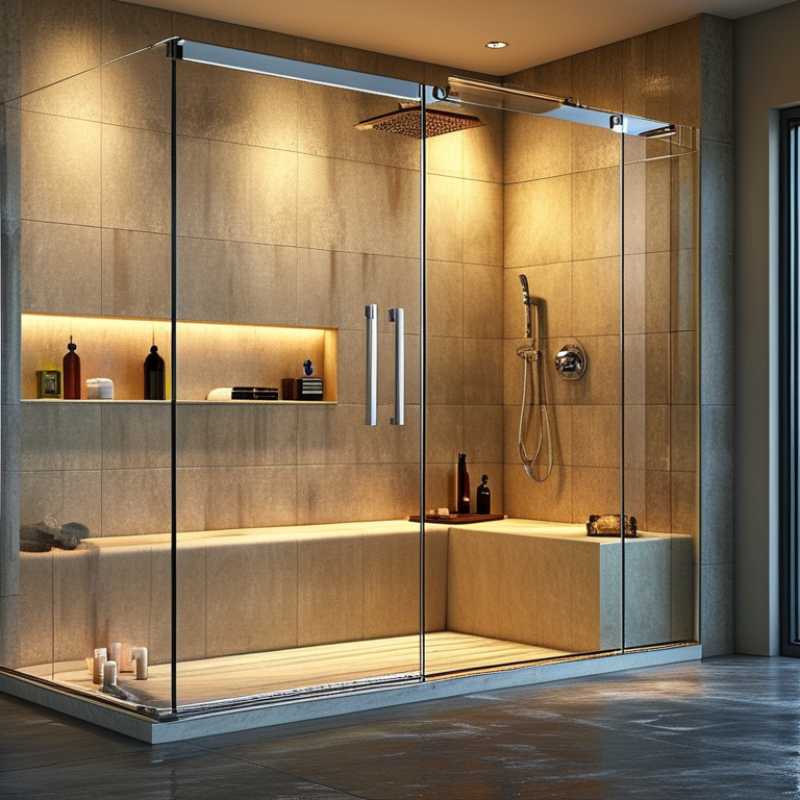
How to Choose the Best Steam Shower Room?

Define Your Steam Shower Needs and Available Bathroom Space

Before choosing a steam shower room, measure the bathroom carefully. Record length, width, ceiling height, door swing, drain position, and electrical access. A compact enclosure may look practical, but a crowded entrance feels uncomfortable every morning. The National Kitchen & Bath Association recommends planning clear floor space around bathroom fixtures, not only the enclosure itself. Do not ignore maintenance access. Steam generators need reachable service points, and glass doors require accurate sealing. My practical mistake was focusing on interior size first. The installation route mattered more.

Steam changes the room’s moisture load. Use a fully enclosed shower, non-porous surfaces, sloped ceilings, and a reliable exhaust fan. The U.S. Environmental Protection Agency recommends indoor relative humidity between 30% and 50%, while ASHRAE Standard 62.2 emphasizes adequate ventilation for indoor air quality. These figures are not decoration. They affect mold prevention and daily comfort. Generator sizing should reflect the enclosure’s cubic volume, glass area, wall material, and ceiling height. A larger room is not automatically better.

Tips: Mark the proposed enclosure on the floor with tape. Stand inside it with the door closed. Check whether elbows, towels, and controls still have space. Select a showerhead within the EPA WaterSense limit of 2.0 gallons per minute, where suitable. Ask a licensed installer to verify waterproofing, drainage, electrical protection, and ventilation. I would also test the controls before final tiling. Small errors become expensive after the walls disappear.

Compare Steam Shower Types, Sizes, Features, and Layouts

How to Choose the Best Steam Shower Room?

Choosing a steam shower room starts with its type. An integrated unit combines the enclosure, controls, and steam generator in one system. It can simplify installation, but replacement parts may be less flexible. A custom steam room offers more freedom with tile, seating, and lighting. However, it needs careful waterproofing and professional electrical planning. A retrofit generator can upgrade an existing shower, provided the enclosure seals properly.

Size affects comfort, energy use, and cleaning time. A compact corner room suits one person and fits small bathrooms. A wider alcove design allows a built-in bench and easier movement. Measure the finished interior, not the rough opening. A door that swings outward improves safety and leaves more interior space. I used to assume that a larger room was always better. In practice, extra volume can require more steam and longer heating.

Tips: Check generator capacity against the room’s finished volume and surface materials. Select controls that remain readable through condensation. Include a service-access panel, slip-resistant flooring, and a ceiling that reduces dripping water. Ventilation should remove moisture after use, while waterproof membranes must follow local building requirements. Review door seals, drain placement, and bench height before installation. Small details matter. A beautiful layout can still fail when maintenance access is ignored. Consult a qualified electrician and plumbing professional before connecting power or water.

How to Choose the Best Steam Shower Room? - Compare Steam Shower Types, Sizes, Features, and Layouts

Typical residential options and planning ranges. Actual requirements vary by local building codes, product specifications, and bathroom conditions.
Comparison Dimension Compact Steam Shower Standard Enclosed Steam Shower Large Steam Shower Custom Steam Room
Typical users One person One to two people Two to three people Two or more people, depending on design
Common footprint Approximately 900 × 900 mm to 1000 × 1000 mm Approximately 1200 × 900 mm to 1500 × 900 mm Approximately 1500 × 1000 mm to 1800 × 1200 mm Designed to suit the available room
Typical height About 2100–2300 mm About 2100–2400 mm About 2200–2400 mm Determined by ceiling and construction plan
Best use case Small bathrooms, en-suites, and limited renovations Most everyday residential bathrooms Large bathrooms and shared use New builds, luxury renovations, or unusual room layouts
Installation approach Prefabricated enclosure or compact modular unit Prefabricated unit or tiled enclosure Large enclosure, usually requiring careful site planning Fully site-built with waterproofing, vapor control, and dedicated services
Space efficiency Excellent Very good Good, but requires more floor area Depends on custom layout
Steam heating requirement Lower output may be suitable because of the small volume Moderate output selected according to enclosure volume Higher output may be required because of the larger volume Calculated from room volume, materials, ceiling height, and insulation
Recommended seating Fold-down seat or compact corner seat One fixed bench or built-in corner seat One long bench or two corner seats Custom bench designed for comfort, cleaning, and access
Ventilation strategy Exhaust fan outside the enclosure, operated after use Effective bathroom exhaust and a sealed enclosure Higher attention to moisture removal and drying time Dedicated ventilation plan; exhaust should not undermine steam containment
Waterproofing needs Sealed enclosure joints and a properly sloped shower base Continuous waterproofing for walls, floor, and penetrations Full waterproofing with special care around benches and controls Continuous waterproofing and vapor-control system suitable for steam use
Door style Hinged or sliding door with a close-fitting seal Hinged door is generally easier to seal and clean Wide hinged door or carefully sealed sliding door Custom hinged door with outward opening and suitable safety clearance
Electrical planning Dedicated circuit may be required; use protected bathroom-rated electrical equipment Dedicated circuit and appropriate residual-current protection are commonly required Electrical load should be confirmed before installation Electrical design must comply with local code and wet-area requirements
Main advantages Lowest space requirement, faster installation, and lower material use Balanced comfort, cost, maintenance, and availability More comfortable seating and better movement inside the enclosure Maximum design flexibility and integration with the bathroom
Main limitations Limited movement, storage, and seating options Requires accurate waterproofing and careful steam containment More expensive to heat, clean, and fit into smaller bathrooms Higher construction complexity, longer installation, and greater maintenance responsibility

Common Steam Shower Layouts

Layout Typical Arrangement Best For Planning Considerations
Corner Layout Two walls form the enclosure, with the door on the open side Small or medium bathrooms Use the corner efficiently; verify door swing and access to controls
Alcove Layout Three walls enclose the shower, with one front opening Bathrooms with a suitable recessed area Often offers efficient steam retention; all wall surfaces need continuous waterproofing
Recessed Wall Layout The enclosure is set into a deeper wall or former closet area Renovations with unused or remodeled wall space Check structural framing, plumbing routes, moisture protection, and ceiling height
Freestanding Layout A self-contained enclosure is positioned away from the main walls Large bathrooms and flexible new-build plans Requires careful routing for water, drainage, power, ventilation, and service access
Wet-Room Layout The shower area is integrated into a fully waterproofed bathroom floor Accessible bathrooms and open-plan designs Steam containment is more difficult; a sealed glass enclosure and controlled ventilation are especially important
Selection checklist: Confirm the finished internal dimensions, ceiling height, door clearance, bench position, drainage, waterproofing system, steam-generator location, electrical requirements, ventilation plan, cleaning access, and compliance with local building and electrical codes before purchasing or installing a steam shower.

Evaluate Materials, Construction Quality, and Safety Standards

Choosing a steam shower room begins with materials that tolerate heat, moisture, and daily cleaning. Tempered safety glass should meet ANSI Z97.1 or CPSC 16 CFR 1201 requirements. Check its edges carefully; tiny chips can become serious weak points. Stainless steel hardware resists corrosion better than ordinary plated metal, especially around hinges and steam outlets. However, “stainless” is not always enough. Ask for the alloy grade and inspect welds, seals, and fasteners.

Construction quality appears in small details. The door should close evenly, without scraping or leaving visible gaps. Silicone joints need continuous beads, not broken patches. The floor should drain quickly, with a textured surface that remains stable under wet feet. I always test the drain with a bucket of water. It is simple, but surprisingly revealing. Electrical components require proper grounding, residual-current protection, and installation by qualified professionals under local codes.

Ventilation and humidity also affect long-term safety. ASHRAE Standard 62.2-2022 lists 50 cubic feet per minute for intermittent bathroom exhaust, or 20 cubic feet per minute continuously. The U.S. Environmental Protection Agency recommends keeping indoor relative humidity between 30% and 50% to discourage mold growth. A steam room may exceed that range temporarily, so post-use ventilation matters. I would still verify the actual airflow, because a quiet fan is not necessarily an effective fan. Look for accessible controls, clear temperature displays, automatic shutoff, and a steam outlet positioned away from direct skin contact.

How to Choose the Best Steam Shower Room?

Evaluate materials, construction quality, and safety standards with a balanced 100-point checklist.

The checklist gives equal priority to construction quality and safety because water-tight assembly, stable doors, electrical protection, emergency controls, and correct installation are essential for safe operation. Materials should be assessed for durable safety glass, corrosion-resistant metal components, sealed joints, and a slip-resistant base. Verify that electrical components are suitable for wet locations and that the product documentation references applicable requirements such as IEC 60335-2-105 for multifunction shower cabinets and IEC 60529 for ingress-protection ratings. Local electrical and building regulations should always take precedence.

Check Installation Requirements, Energy Use, and Maintenance Needs

Choosing the best steam shower room starts with the space behind the walls. Measure the enclosure carefully, including ceiling height and door clearance. Steam must stay inside, so tight seals and a sloped ceiling help control dripping water. Check electrical capacity, water supply, drainage, and ventilation before buying equipment. A qualified electrician and plumber should review the installation plan. Local building requirements can differ.

Energy use depends on the room’s volume, insulation, generator size, and bathing habits. A smaller, well-sealed enclosure usually reaches steaming temperature faster. Use a timer instead of running steam continuously. Insulate nearby pipes where practical. Still, energy ratings can be confusing. Ask for tested performance data, not only attractive advertising claims. Maintenance also matters. Wipe glass and fittings after each use, clean the steam outlet, and inspect door seals for gaps. Hard water may require regular descaling. Ignoring mineral buildup can reduce steam output and shorten component life.

Tips: Leave the door open after bathing so surfaces can dry. Keep the exhaust fan running briefly. Check seals every month. Do not block ventilation openings. I would also record cleaning dates, because memory is unreliable. A service inspection is sensible when noise, slow heating, or uneven steam appears. Small problems become expensive when hidden behind finished walls.

Compare Prices, Warranties, and Long-Term Product Value

How to Choose the Best Steam Shower Room?

When comparing steam shower rooms, do not judge value by the showroom price alone. A low quote may exclude delivery, electrical work, plumbing changes, or professional installation. Ask for an itemized estimate. Check the steam generator’s output, enclosure materials, door seals, controls, and ventilation requirements. These details affect comfort and repair costs over time.

Warranty wording deserves careful reading. Confirm coverage periods for the generator, glass, seals, controls, and labor. Some warranties cover parts but exclude service visits or damage caused by poor installation. Ask who handles claims and whether replacement parts remain available after the warranty ends. A clear answer is more useful than a long promise. Keep invoices, installation records, and maintenance instructions in one folder.

Long-term value also depends on daily operating costs. Compare heating time, automatic shutoff features, water use, and access to serviceable components. A cheaper unit may become expensive if a failed control requires removing tiled walls. I once focused too heavily on purchase price and overlooked maintenance access. That was a costly assumption. A slightly higher initial price can make sense when construction is durable and repairs are straightforward. Still, expensive does not always mean better. Request technical specifications, verify installer experience, and inspect warranty exclusions before paying a deposit.

FAQS

: How should I measure my bathroom before choosing a steam shower room?

: Record length, width, ceiling height, door swing, drain position, and electrical access. Mark the enclosure with floor tape. Close the door and test your movement. Do not forget the installation route and service access.

What type of steam shower room suits a small bathroom?

A compact corner enclosure usually suits one person and uses less floor space. An outward-swinging door can improve safety and interior movement. However, tight entrances may feel uncomfortable every morning. Small is not always practical.

Does a larger steam room provide better comfort?

Not necessarily. A larger room needs more steam and may heat more slowly. A wider enclosure can fit a bench and allow easier movement. Compare comfort with energy use and cleaning time.

What features help control moisture inside a steam shower?

Choose a fully enclosed room with non-porous surfaces and tight door seals. A sloped ceiling helps reduce dripping water. Use a reliable exhaust fan after bathing. Leave the door open while surfaces dry.

How do I choose the correct steam generator size?

Match generator capacity to finished room volume, ceiling height, glass area, and wall materials. Do not measure only the rough opening. Ask for tested performance information. Advertising claims may not tell the whole story.

What installation checks are important before the walls are finished?

Confirm waterproofing, drainage, electrical protection, water supply, ventilation, and service access. A qualified electrician and plumbing professional should review the plan. Test the controls before final tiling. Hidden mistakes become expensive.

How can I reduce energy use during steam bathing?

Use a timer instead of running steam continuously. A smaller, well-sealed room usually heats faster. Insulate nearby pipes where practical. Energy ratings can be confusing, so ask for measured performance data.

What maintenance does a steam shower room require?

Wipe glass and fittings after each use. Clean the steam outlet and inspect door seals monthly. Hard water may require regular descaling. Record cleaning dates. Memory is unreliable.

What problems suggest that professional service may be needed?

Slow heating, unusual noise, uneven steam, or visible seal gaps deserve attention. Mineral buildup can reduce steam output and shorten component life. Ignoring small problems is tempting. It is also costly later.

Conclusion

Choosing the best Steam Shower Room starts with understanding your household’s bathing habits, available bathroom space, and preferred layout. Consider whether you need a compact unit, a spacious enclosure, or a customized design, then compare features such as seating, controls, ventilation, lighting, and shower functions. The right combination should provide comfort without overcrowding the room or making daily use complicated.

Pay close attention to construction quality, moisture-resistant materials, stable doors, reliable sealing, and recognized safety requirements. Before purchasing, confirm plumbing, electrical, ventilation, and floor-support needs, along with expected energy consumption and cleaning requirements. Finally, compare total prices rather than focusing only on the initial cost. A clear warranty, accessible replacement parts, straightforward maintenance, and durable performance can greatly improve long-term value. By balancing size, features, safety, installation demands, and ongoing expenses, you can select a Steam Shower Room that suits your bathroom and delivers a comfortable, dependable experience.


Charlotte

Charlotte

Charlotte is a seasoned marketing professional with a deep understanding of the company's portfolio and a passion for elevating its presence in the market. With a keen eye for detail and a commitment to excellence, she ensures that our professional blog is regularly updated with insightful articles......