A Clawfoot Bathtub can be a striking focal point, but its shape also affects comfort, plumbing, and room layout. The Houzz 2024 U.S. Bathroom Trends Study tracks real renovation choices, while the National Kitchen & Bath Association’s 2024 Bath Trends Report offers professional insight into changing bathroom priorities. These reports provide useful context, though neither should be read as a ranking of clawfoot styles. A clawfoot tub is a specific choice, not a universal upgrade.
This guide explores the main types: classic roll-top, slipper, double-ended, and pedestal-style designs. Their differences show up in practical details. A slipper tub raises one end to support the back; a double-ended model places the drain near the center for bathing at either end. Traditional feet lift the basin above the floor, while pedestal forms create a smoother, grounded silhouette. The rim, interior slope, and faucet position matter, too. You notice them most when you lean back—or reach for the tap.
A careful comparison should cover material, weight, dimensions, and installation needs, not appearance alone. Cast iron can be very heavy. Acrylic is generally lighter, but construction and finish vary by manufacturer. Room measurements and floor capacity deserve attention before purchase. A beautiful tub can still feel awkward in a narrow bathroom.
One sourcing note: no supporting articles or verifiable expert quotation were provided, so I won’t invent a named specialist’s words. Treat confident claims about a “best” type with care. The right choice depends on who will use the tub, how the room is built, and what trade-offs you can accept. A little less romance; more useful planning.
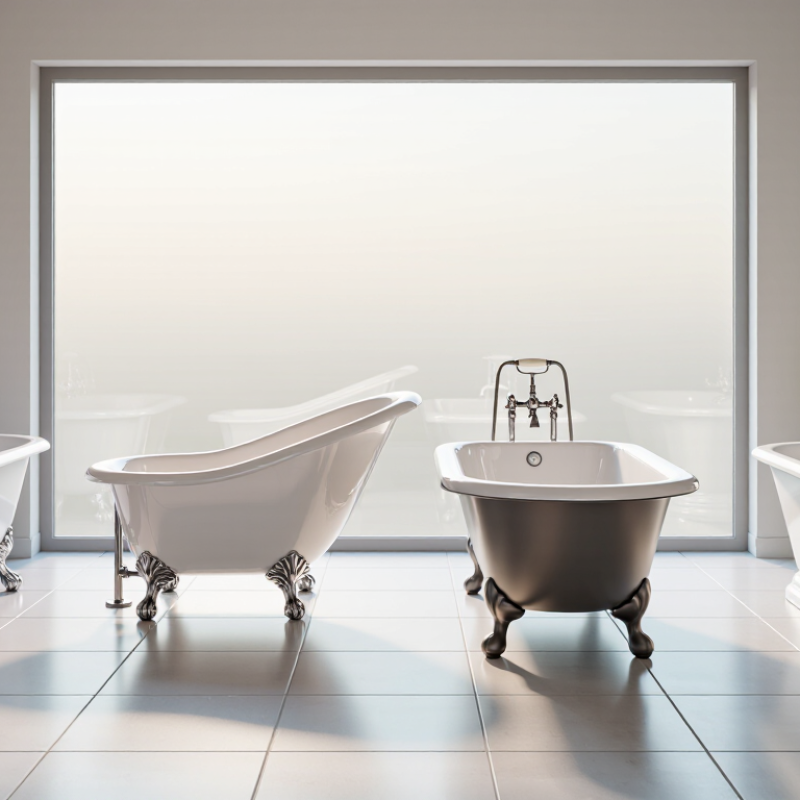
What Are the Different Types of Clawfoot Bathtubs?
How Clawfoot Bathtubs Are Classified
Clawfoot tubs are commonly classified by their shape and bathing position. A roll-top tub has a rounded rim that curves outward, often creating a traditional profile. A slipper tub raises one end to support the back and shoulders. Double-slipper models raise both ends, allowing either bather to recline comfortably. These labels can overlap: a tub may have both a roll-top rim and a double-slipper shape. The categories are useful, but not perfectly tidy.
Another way to classify tubs is by end layout, feet, and material. On a single-ended model, the faucet usually sits at one end, leaving the other end open for reclining. Double-ended tubs place the drain and faucet near the center, so both ends can be used. Feet may be simple, ornate, or shaped like animal claws. Cast iron holds heat well but is heavy; acrylic is lighter, though its feel and durability vary by construction. Check the floor’s load capacity before choosing a heavy tub.
Tips: Measure the doorway, bathroom, and planned faucet clearance. Small details matter. Sit in a showroom model if possible; photographs rarely show how steeply a slipper end rises. Confirm installation requirements with a qualified professional, especially for older floors. Even careful planning can miss something. That is worth checking twice.
| Classification | Type | Typical Features | Useful Considerations |
|---|---|---|---|
| By tub profile | Classic roll-top | Has a rounded, rolled rim and generally similar-height ends. The familiar traditional profile is often paired with four decorative feet. | A versatile style; check the tub’s dimensions and faucet arrangement to confirm it suits the bathroom layout. |
| By tub profile | Single slipper | One end rises higher than the other, providing a sloped backrest for a more reclined bathing position. | Confirm which end is elevated before planning the faucet and drain positions. |
| By tub profile | Double slipper | Both ends are raised and sloped, with the drain and faucet commonly positioned near the middle. | Allows reclining at either end; its shape and central fittings may require additional floor space. |
| By tub profile | Double-ended | Both ends are typically rounded or similarly shaped, with a more level rim than a slipper tub. Fittings are often placed along the side or near the center. | Offers a balanced look and can accommodate bathing from either end; verify the exact fitting layout. |
| By material | Enamel-coated cast iron | A cast-iron shell finished with a smooth, vitreous enamel surface. It is notably heavy and can retain heat well. | Check floor support, delivery access, and installation requirements, especially in older buildings. |
| By material | Acrylic | A molded, typically lighter-weight tub with a smooth surface. Some models use reinforced construction for added rigidity. | Usually easier to move than cast iron; follow the manufacturer’s guidance for support and cleaning. |
| By material | Enamel-coated steel | A formed steel tub with a hard enamel finish. It is generally lighter than cast iron. | Compare the specific model’s weight, finish, and support requirements; properties vary by construction. |
| By support and appearance | Foot style and finish | Feet may have claw, ball-and-claw, or simpler ornamental forms, and are available in different finishes. The feet support the tub and contribute to its appearance. | Check that the feet are compatible with the tub, properly secured, and suitable for the floor surface. |
Clawfoot tubs are freestanding tubs raised on feet. Exact profiles, materials, fittings, and construction vary by model, so check product specifications before installation.
Its rounded rim curves outward around the tub. Both ends are usually similar in height. The shape feels balanced.
It can soften clean, modern finishes while keeping a traditional feel. Check the rim in person; small width differences can change its appearance.
Check its filled weight against your floor’s capacity. Cast iron holds heat well, but it can be very heavy. Ask a qualified contractor to assess the support.
Measure the tub, doorway, faucet reach, and space around its feet. An open patch of floor may not be enough. Dust gathers there.
Both ends curve upward, with a lower center for sitting. Neither end is favored, and two bathers may lean back at opposite sides.
It is often placed along the long side, near the center. Tap-hole locations vary, so check the tub’s specifications before choosing plumbing.
The raised ends may support your back. Width and water depth affect comfort, so try sitting in a similar tub if possible. I might be overvaluing the silhouette.
Not always. High ends may make entry difficult for someone with limited mobility. Leave safe stepping room, and consider the seating angle before deciding.
Clawfoot Bathtubs are commonly classified by the shape of their rims and the way they support a comfortable bathing position. The classic roll-top style has a gently curved edge that gives the tub a familiar, finished look. A single-slipper tub raises one end to provide extra back support, making it suited to relaxing in a reclined position. In contrast, a double-slipper tub has raised ends on both sides, creating a more symmetrical design and allowing bathers to lean back at either end.
A double-ended clawfoot bathtub keeps its rim at a consistent height around both ends, with the faucet and drain typically arranged to leave room for two people or for comfortable bathing from either side. These differences affect both appearance and use, so choosing among the styles depends on the desired level of support, the bathroom’s layout, and personal preference.

 Kaifeng