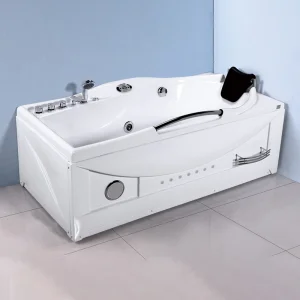
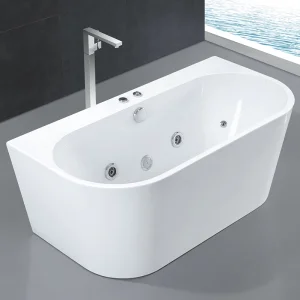
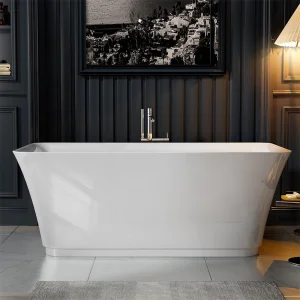
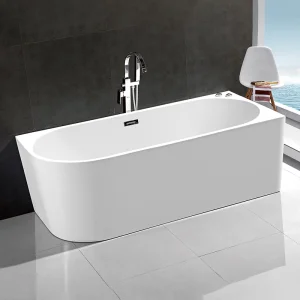
High-performance acrylic formulations and advanced hydrodynamic engineering optimized for European sanitary standards.
The Republic of Poland has firmly established itself as one of Europe’s primary hubs for manufacturing, logistics, and residential construction. As B2B buyers, real estate developers, and sanitary ware distributors navigate the complexities of supply chain management, understanding the structural dynamics of the Polish bathtub market becomes vital. In Poland, the demand for bathroom fixtures is driven by three main sectors: high-density urban residential projects, commercial hospitality developments (specifically thermal and wellness resorts in Southern and Northern Poland), and the rapid expansion of prefabricated bathroom module manufacturers (modular bathroom pods) servicing all of Western Europe.
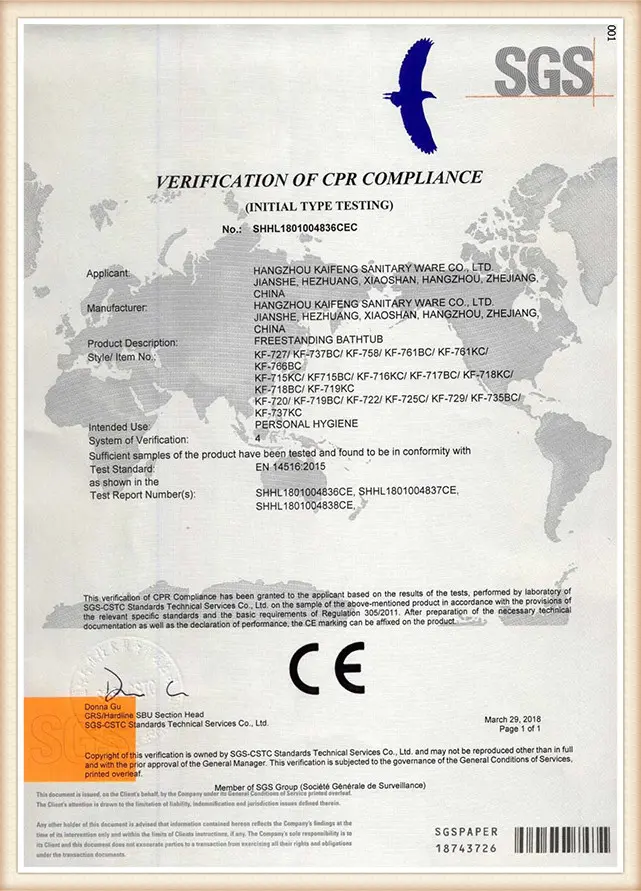
From an industrial perspective, the local Polish bathtub manufacturing ecosystem consists of both domestic heritage brands and German or Swiss sanitary multinationals that have established production facilities in Poland. This environment has raised the quality benchmark. Polish distributors and developers expect compliance with rigorous European standards, specifically EN 14516 (domestic baths) and EN 274 (waste fittings). Consequently, B2B procurement pipelines must balance local distribution channels with global manufacturing powerhouses that offer specialized OEM/ODM capabilities, cost-effective scaling, and advanced smart technologies.
"To secure a competitive edge in Poland’s sanitary supply chain, sourcing strategies must combine direct-from-factory pricing with strict adherence to CE certifications, ISO 9001:2000 quality protocols, and flexible product customization parameters."
For European sanitary brand owners and large-scale importers, deciding between local manufacturing in Central/Eastern Europe and global direct-factory partnerships requires a comprehensive analysis of total cost of ownership (TCO) and engineering capabilities.
While domestic factories in Poland offer shorter transit times, they are increasingly constrained by rising energy costs (particularly impact-heavy acrylic thermoforming processes and cast-iron/solid-surface casting) and labor shortages within the EU. Conversely, partnering with premier manufacturing hubs in China, such as Hangzhou Kaifeng Sanitary Ware Co., Ltd., offers substantial economic advantages:
The European bathtub market is undergoing a significant transition from basic utilitarian design to advanced wellness integration. In Poland and neighboring EU nations, this shift is characterized by key technological and aesthetic trends:
The shift from heavy, cast-iron bathtubs to lightweight, high-performance acrylic (PMMA) reinforced with dense fiberglass and unsaturated polyester resin has revolutionized the installation and usage process. Modern acrylic bathtubs feature superior heat-retention properties. B2B buyers focus on thermal transmission rates; multi-layered acrylic structures keep water warm for longer, supporting eco-friendly building standards (such as BREEAM and LEED certifications in Poland).
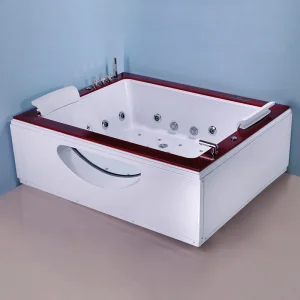
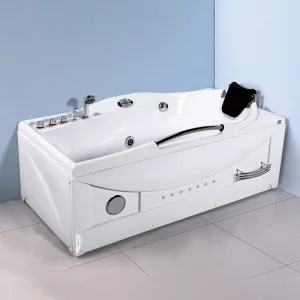
Whirlpools are no longer considered purely luxury items; they are now integrated into mainstream residential wellness designs. Modern systems incorporate:
Sourcing the right bathtub requires aligning product specifications with the unique requirements of the destination project. Here is how B2B buyers match their inventory to specific Polish market applications:
In major urban centers, space optimization is key. Compact, freestanding acrylic soaking tubs or built-in rectangular tubs are popular choices. Developers prioritize easy-to-install designs with integrated steel frames and adjustable feet to speed up onsite installation and lower labor costs.
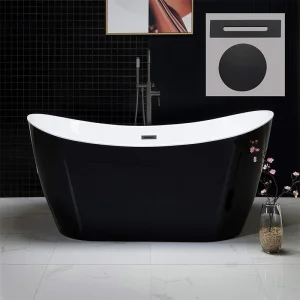
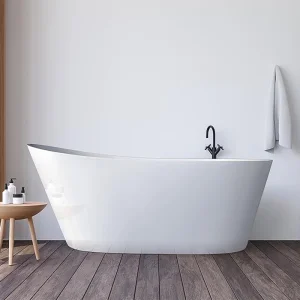
Poland's hospitality industry relies heavily on spa tourism. Luxury hotels require large-format, double-ended freestanding tubs, matte black statement bathtubs, or high-end smart massage whirlpools. These units must feature low-noise pumps (operating under 50dB) and reliable self-drainage systems to maintain hygiene and guest satisfaction.
Poland is a major manufacturing hub for offsite modular bathroom pods exported to Germany, Scandinavia, and the UK. These factories require highly standardized bath fixtures with exact tolerances (+/- 2mm) and pre-installed, pre-tested drain-overflow systems to ensure quick integration on the assembly line.
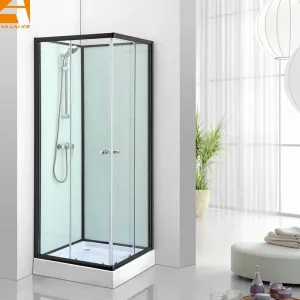
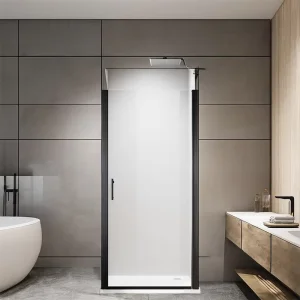
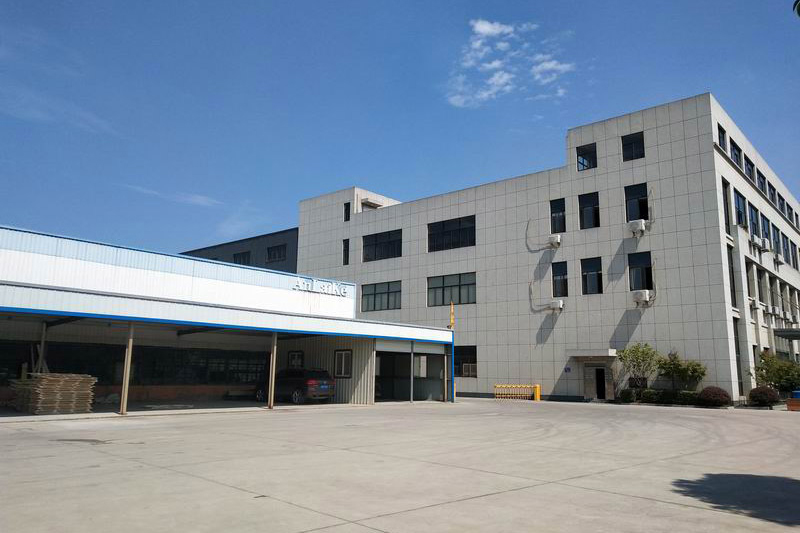
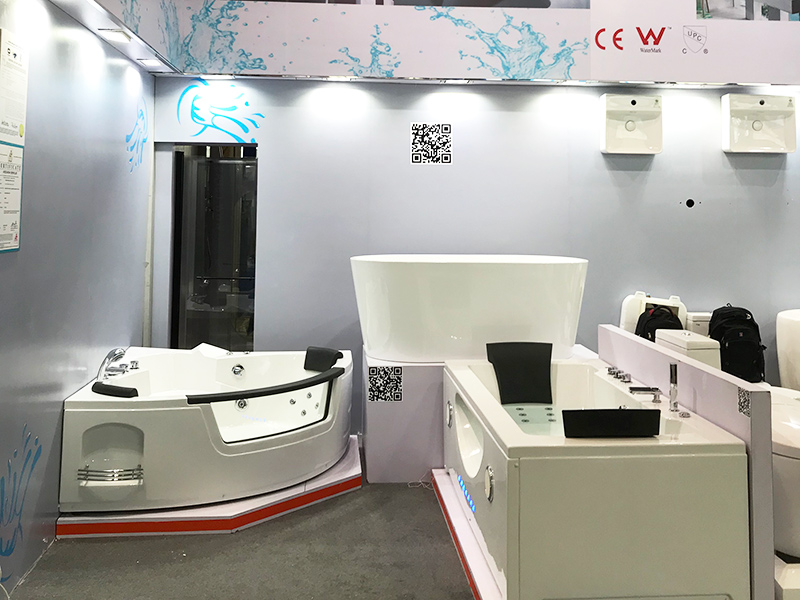
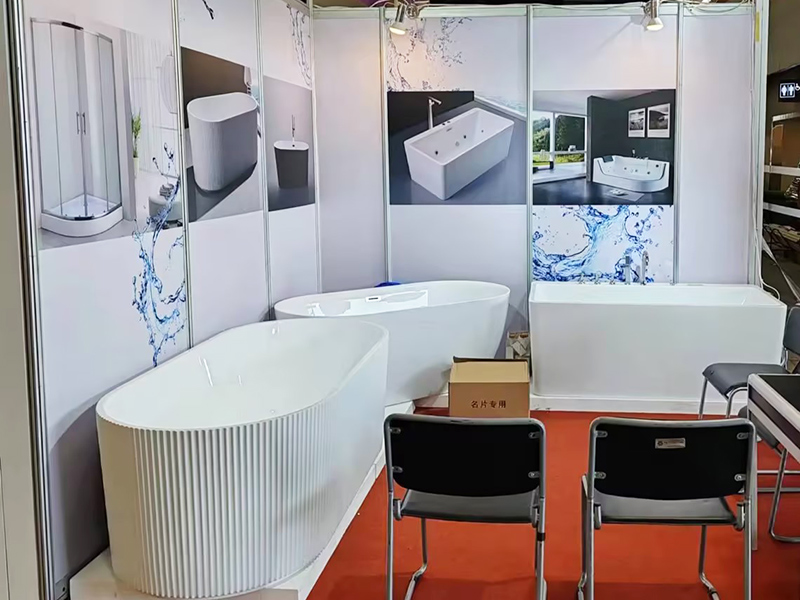
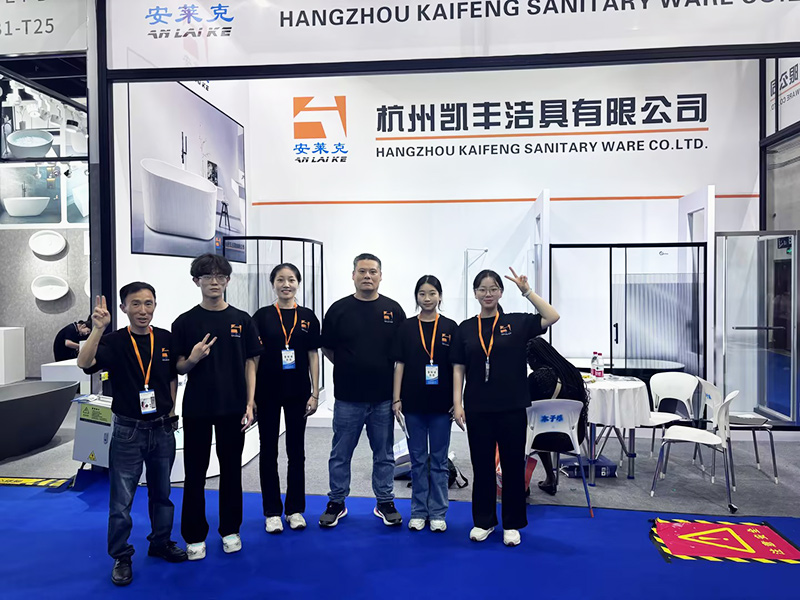
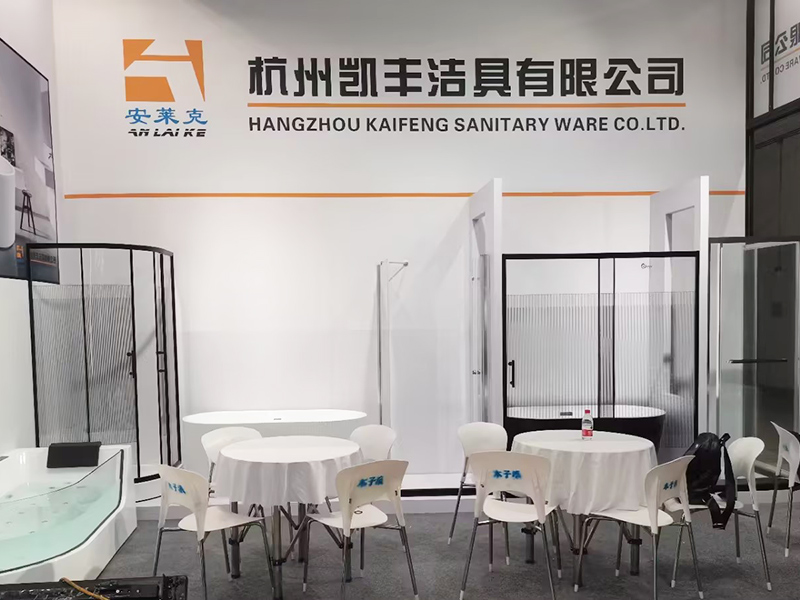
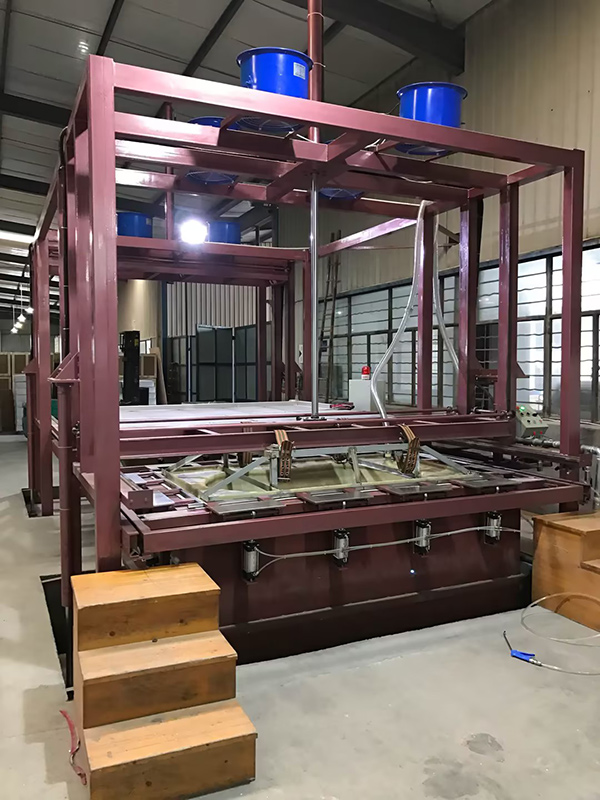
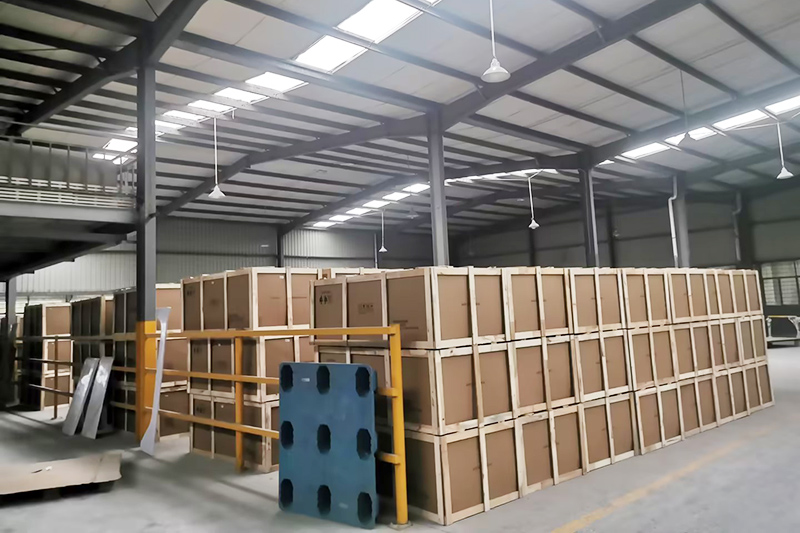
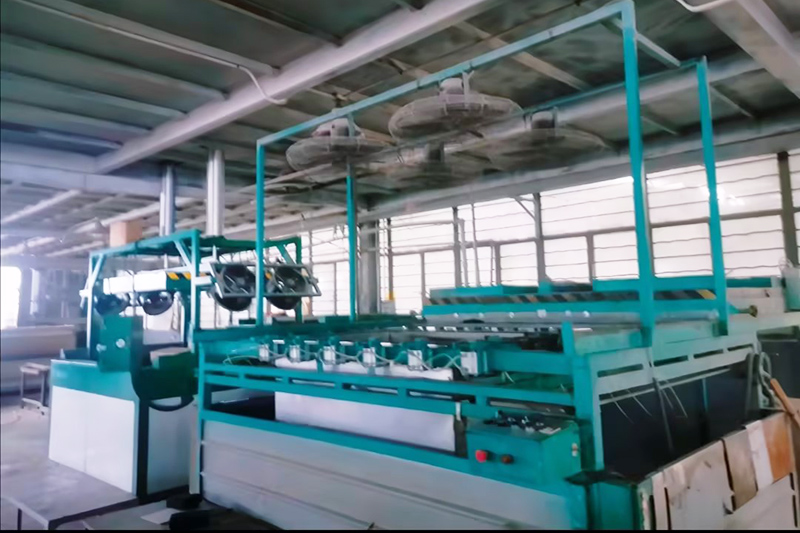
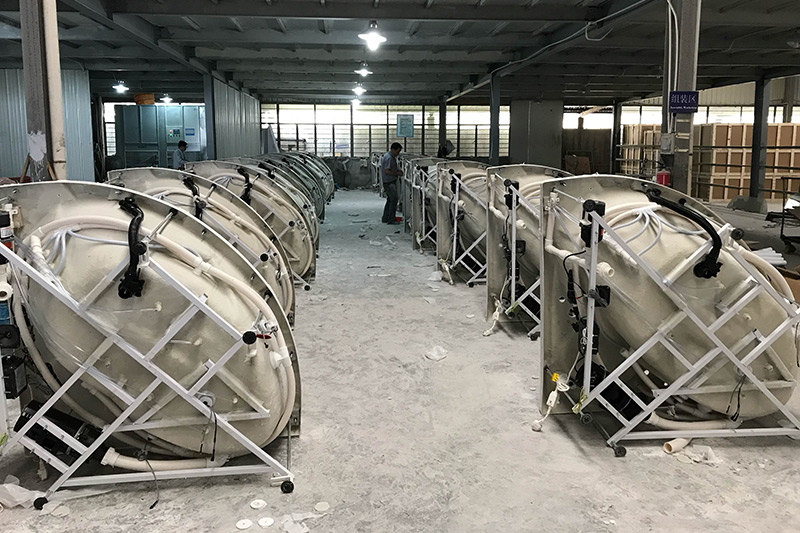
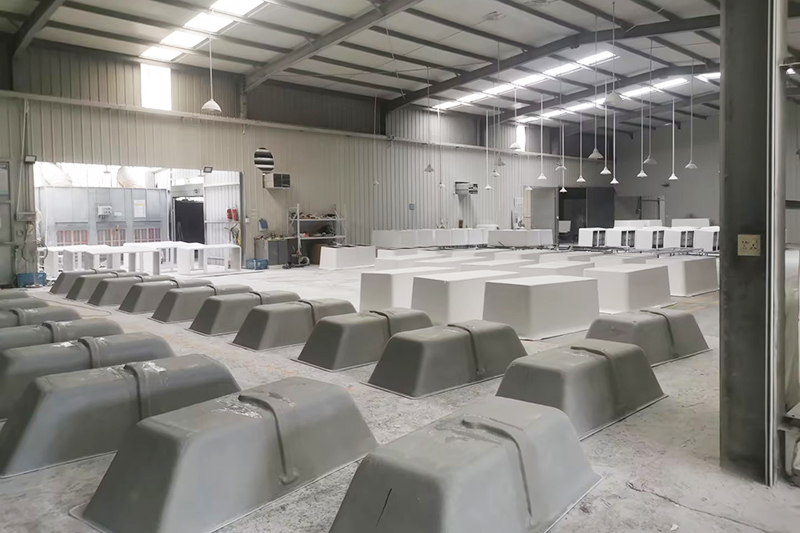
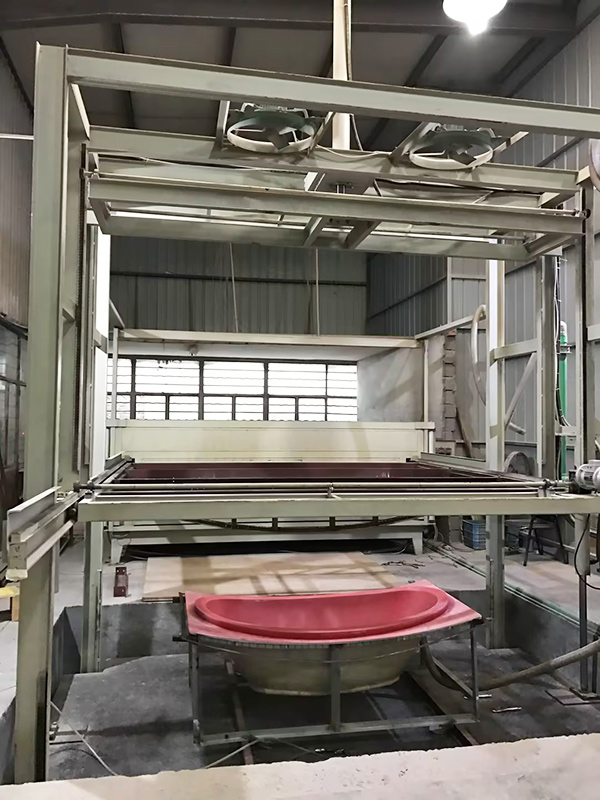
Founded in 2005, Hangzhou Kaifeng Sanitary Ware Co., Ltd. (located in Xiaoshan District, Hangzhou, China) is a premier manufacturer of premium bathroom fixtures. With two decades of dedicated research, design, and manufacturing, we specialize in supplying high-performance freestanding bathtubs, massage whirlpools, steam showers, and custom glass enclosures to international markets.
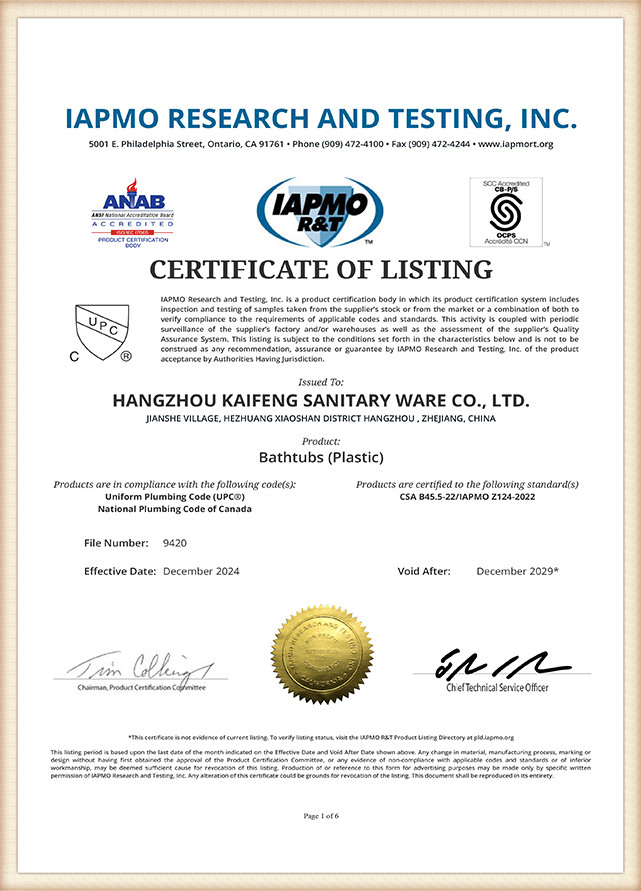
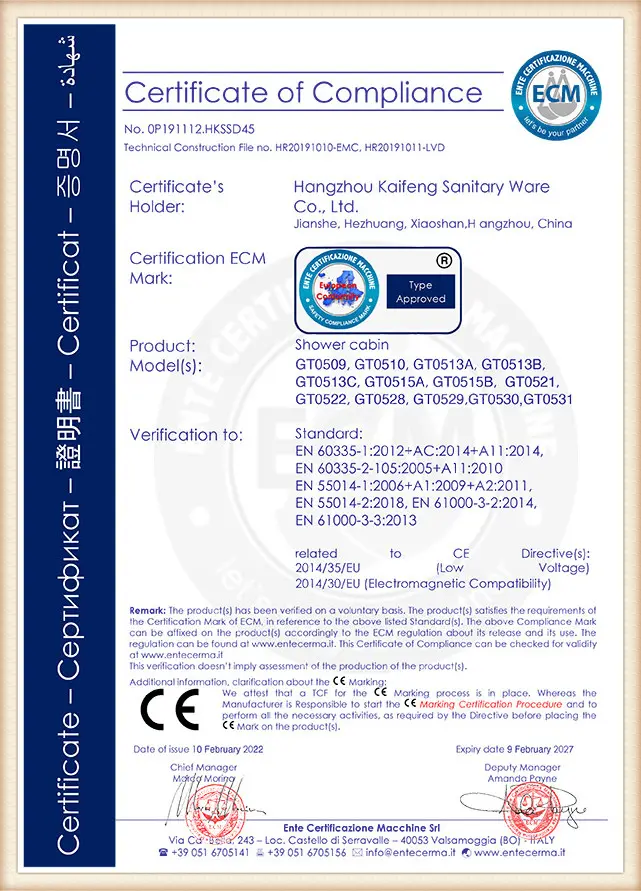
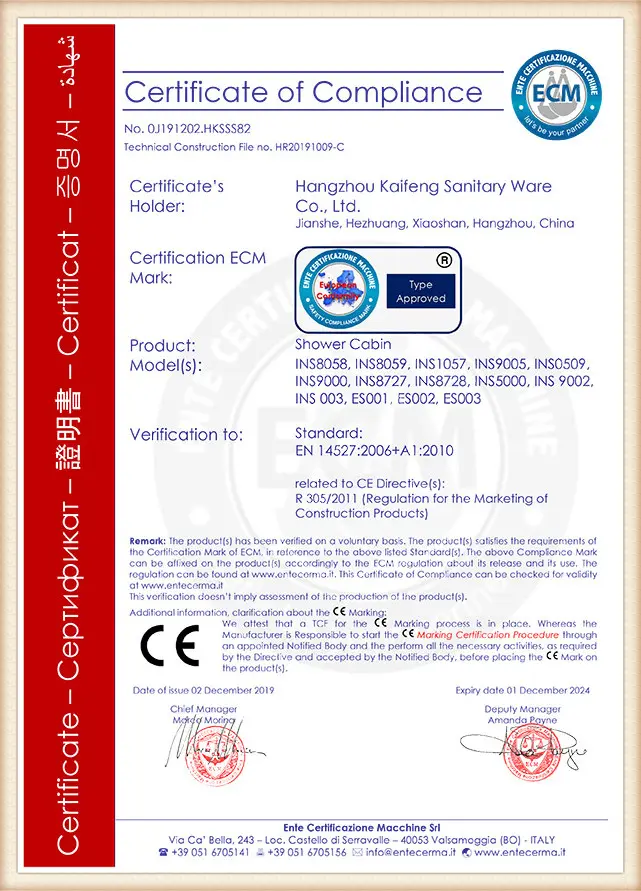
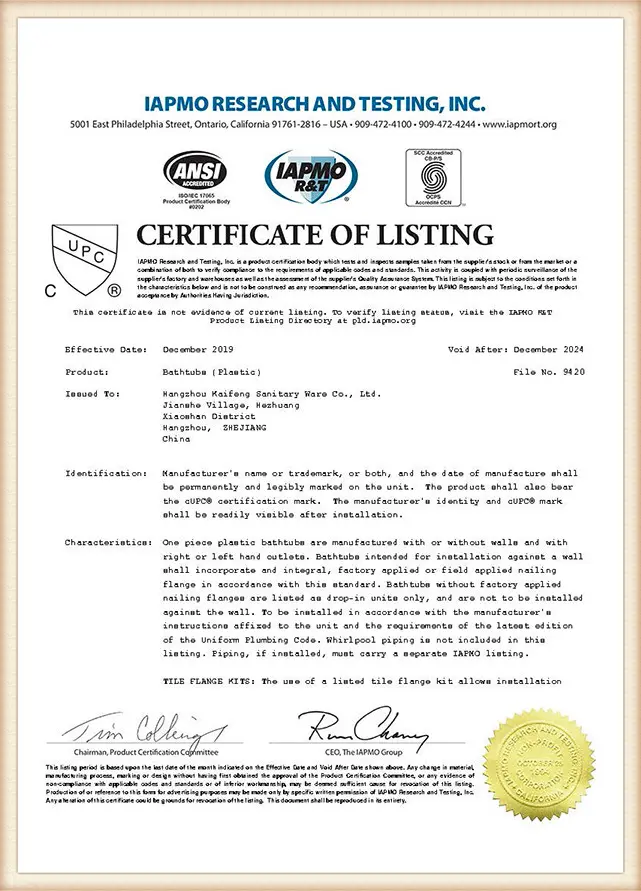
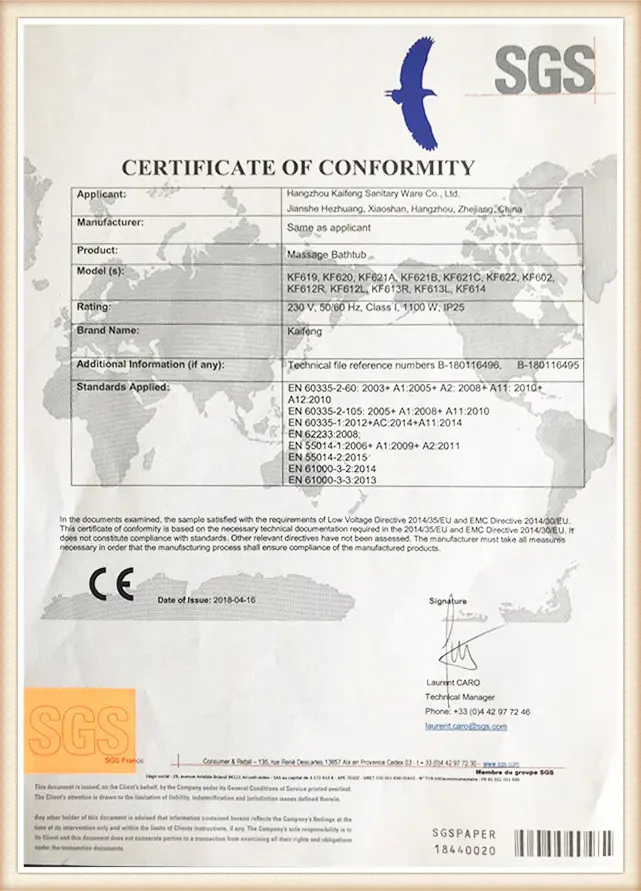
Our operations are certified under the ISO 9001:2000 quality management system, ensuring strict monitoring from raw material inspection (PMMA acrylic sheet purity and fiberglass resin density) to final hydrostatic and electrical testing.
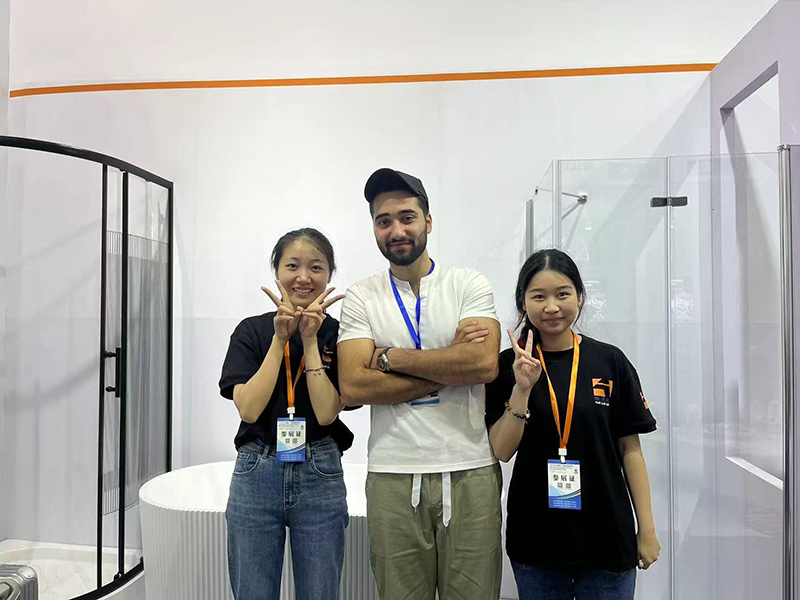
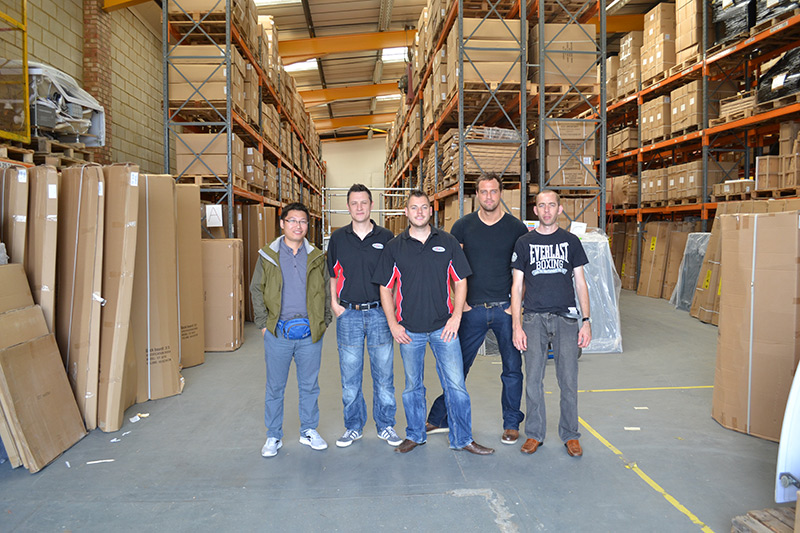
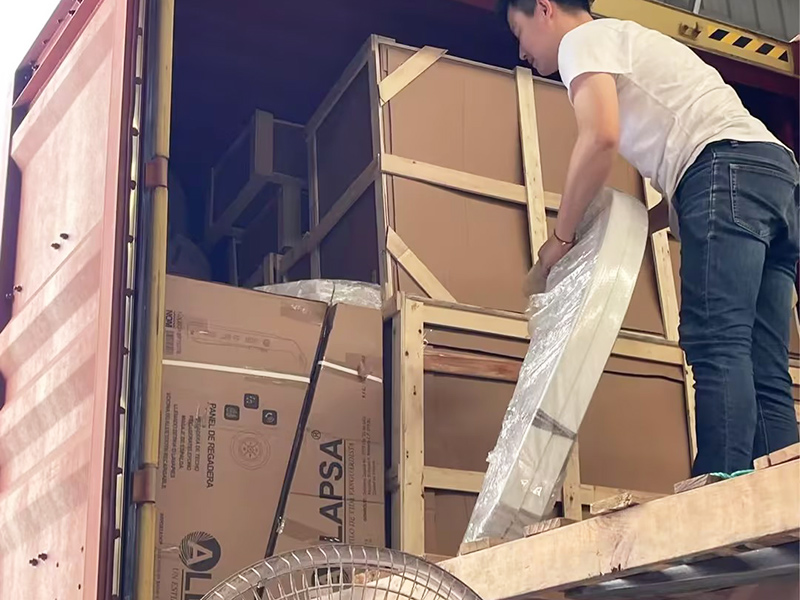
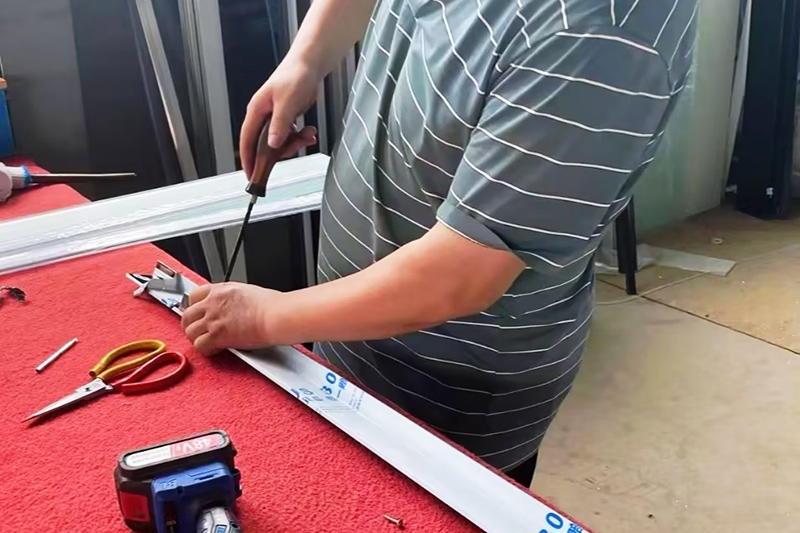
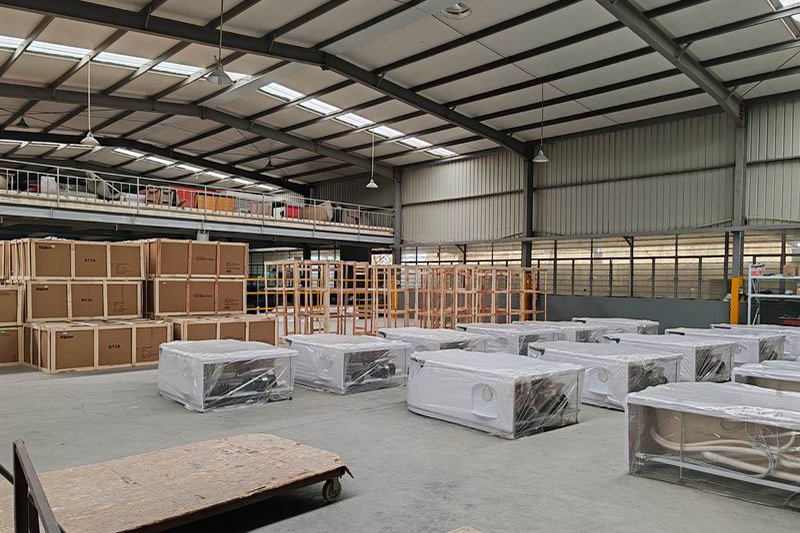
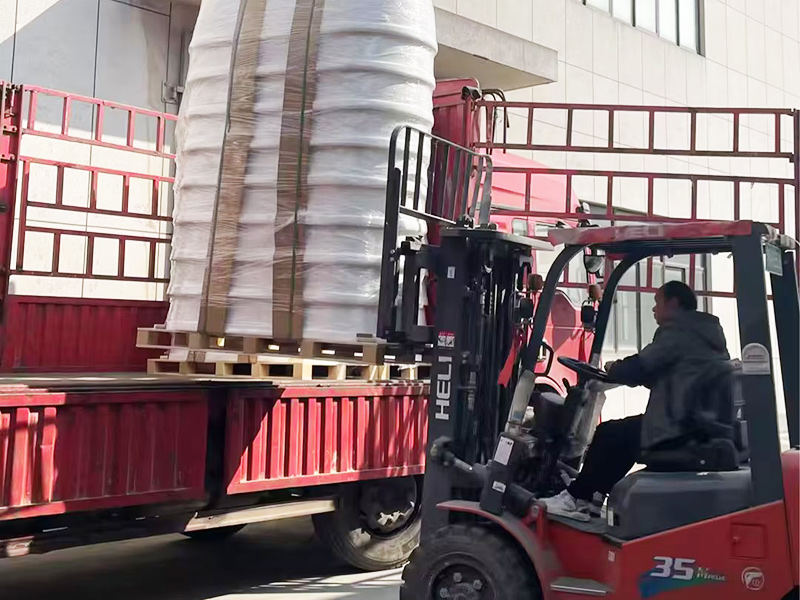
We invite you to view our modern manufacturing facilities and our internationally recognized quality certificates:
As we look toward 2030, our engineering team is focused on developing products that meet emerging global sustainability requirements and smart home trends. Our technology roadmap centers on three main areas:
Connect with our B2B sales engineers today for a detailed pricing analysis, custom catalog options, and direct factory support.
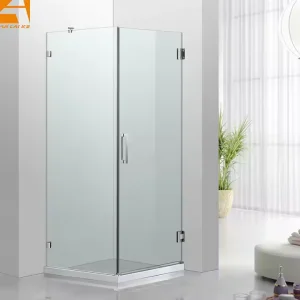
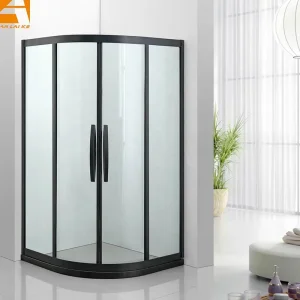
Send Inquiry NowExplore our wider selection of premium bathtubs, corner whirlpools, and modern shower enclosures designed for European properties.
 Kaifeng