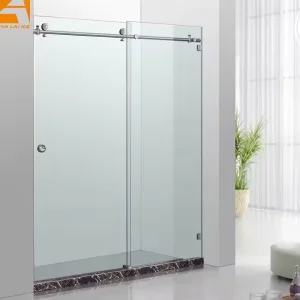
Premium sliding systems engineered to meet the spatial optimization requirements of Northern Italy's luxury hospitality and modern residential developments.
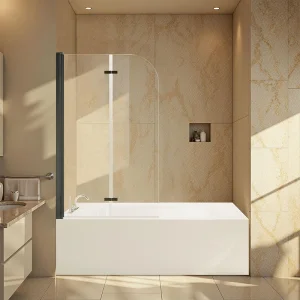
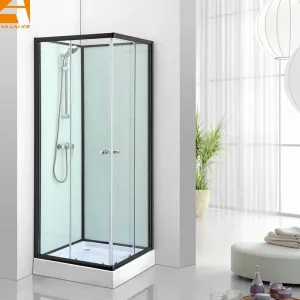
Milan, serving as a global center of design, luxury hospitality, and progressive urban planning, presents a uniquely demanding environment for architectural sliding systems and glass enclosure structures. In Northern Italy, space is both a premium asset and a canvas for high-end aesthetic execution. The local market for sliding mechanisms—ranging from interior room dividers and dynamic partition walls to luxury sanitary sliding glass doors—is driven by a blend of historical conservation and cutting-edge contemporary construction.
In the heart of Lombardy's commercial capital, real estate developers and architectural firms are transitioning away from traditional swing doors to optimize floor space ratio (FSR). Historic renovations in the Quadrilatero della Moda and modern developments in the Porta Nuova district share a common necessity: the utilization of ultra-slim profiles, high-load silent runners, and heavy-duty tempered safety glass that conforms strictly to the rigorous European safety certifications.
The demand pattern in Milan highlights a clear shift toward hidden structural hardware, soft-close hydraulic dampers, and minimal visual boundaries. For B2B procurement professionals, this means sourcing partners must provide products that do not simply function, but actively enhance the structural narrative of high-end commercial spaces, multi-family residential towers, and boutique hotel bathrooms.
"Modern Milanese architectural specifications do not tolerate exposed bulkheads or noisy tracks. Sliding hardware must perform silently, seamlessly integrated within wall cavities or suspended from low-profile structural tracks."
Global procurement directors and supply chain managers in the real estate, hospitality, and sanitary distribution networks look for specific performance thresholds when evaluating sliding door manufacturers. A standard residential sliding door is no longer sufficient for institutional procurement. Today’s international tenders demand comprehensive material tracing, longevity testing, and dynamic load assessments.
Key engineering variables required by global procurement agencies include:
Tested for up to 150,000 continuous opening and closing cycles without mechanical failure, representing a 20-year service life.
Passes 48-hour neutral salt spray (NSS) testing to ensure long-term resistance to oxidization and chemical cleaning agents.
Low-friction polymer compound rollers ensure a sliding force under 15N, providing effortless single-finger operation.
The core differentiator between run-of-the-mill sliding frames and high-end architectural installations lies in the design of the tracking profile and rolling mechanism. Over the past five years, the industry has migrated from standard top-hung tracks to sophisticated integrated floor-guided or premium top-hung systems utilizing planetary roller bearings.
Planetary Roller System: Standard sliding doors often experience uneven wear due to single-point loading. Dynamic sliding systems utilize planetary roller arrays which distribute the weight of the glass panel across multiple points of contact, mitigating mechanical wear and providing a completely uniform gliding sensation.
Hydraulic Soft-Close Dampers: To eliminate the risk of glass-on-glass collision and frame bouncing, leading-edge manufacturers integrate dual-directional hydraulic soft-close systems. These dampers actively decelerate the sliding panel during its final 50mm of travel, drawing it gently into the fully closed or fully open position.
As an established global manufacturing powerhouse, Hangzhou Kaifeng Sanitary Ware Co., Ltd. operates at the intersection of Chinese manufacturing scale and strict international quality standards. With over 20 years of expertise in the sanitary and sliding hardware sector, Kaifeng has built a reputation as a trusted partner for B2B distributors, high-volume real estate developers, and custom project coordinators across more than 50 countries worldwide.
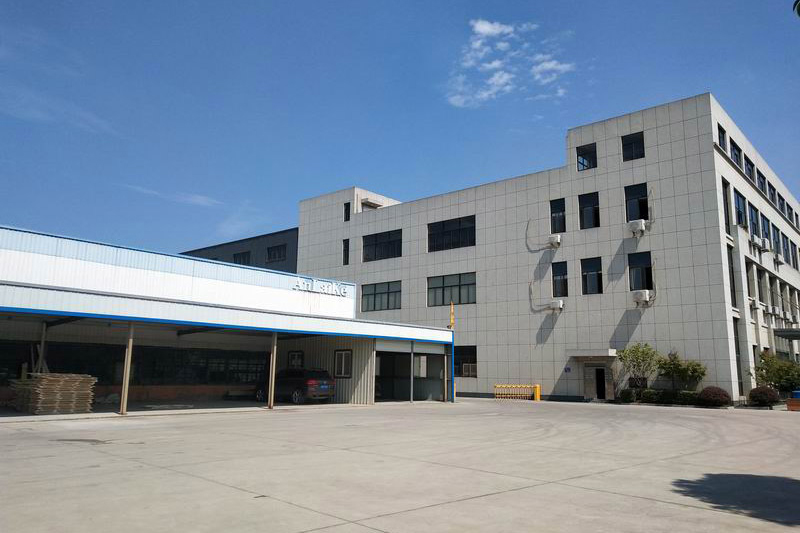
Operating out of a state-of-the-art 20,000-square-meter manufacturing facility in Hangzhou's Xiaoshan District, our production infrastructure is designed to execute high-volume orders with consistent precision. Under the rigid framework of the ISO 9001:2000 quality management system, every production stage is monitored, from the raw extrusion of aluminum frames to the final packaging of custom tempered glass panels.
Our manufacturing scale is reflected in our annual and monthly output capacities:
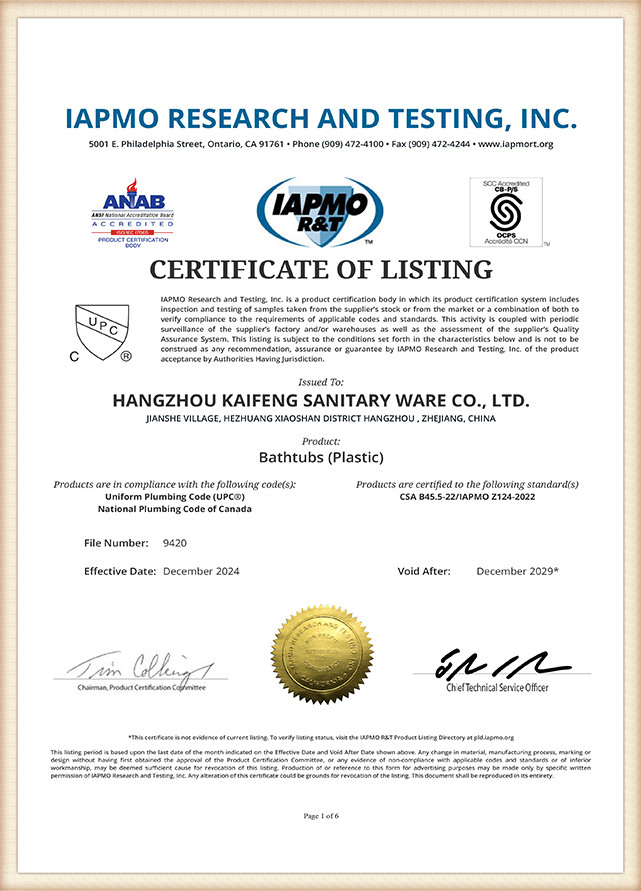
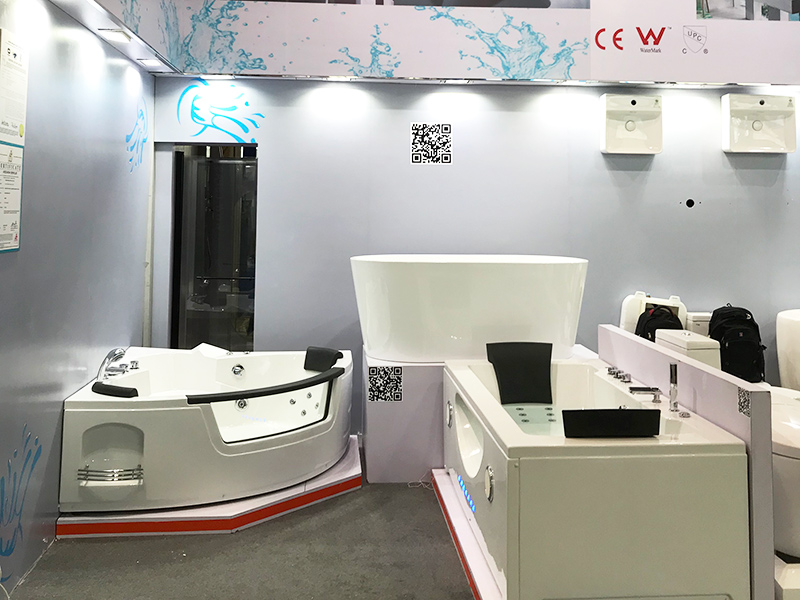
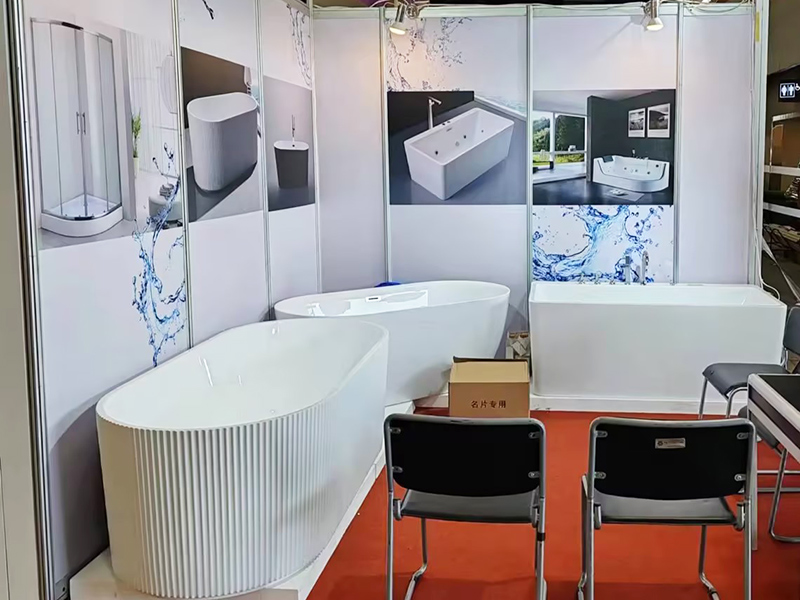
Our global presence is continually reinforced through active participation in leading international building exhibitions, including the Canton Fair (China), IBS (USA), and The Big 5 (Middle East). This global outlook enables our engineering team to stay ahead of international design trends, integrating local requirements like European CE standards and North American CUPC certifications directly into our manufacturing processes.
A reliable product is the output of a reliable process. At Hangzhou Kaifeng Sanitary Ware Co., Ltd., quality control is not a final checkpoint, but a comprehensive protocol integrated into every production phase. The factory utilizes computerized laser testing systems to ensure that glass cutting, polishing, and drilling tolerances are maintained within +/- 0.5mm, ensuring completely flush fitting of hardware and hinges.
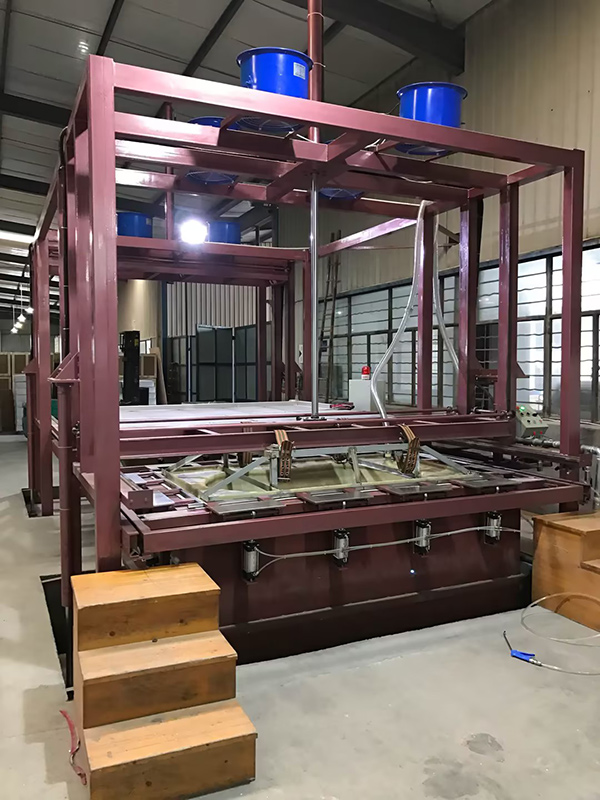
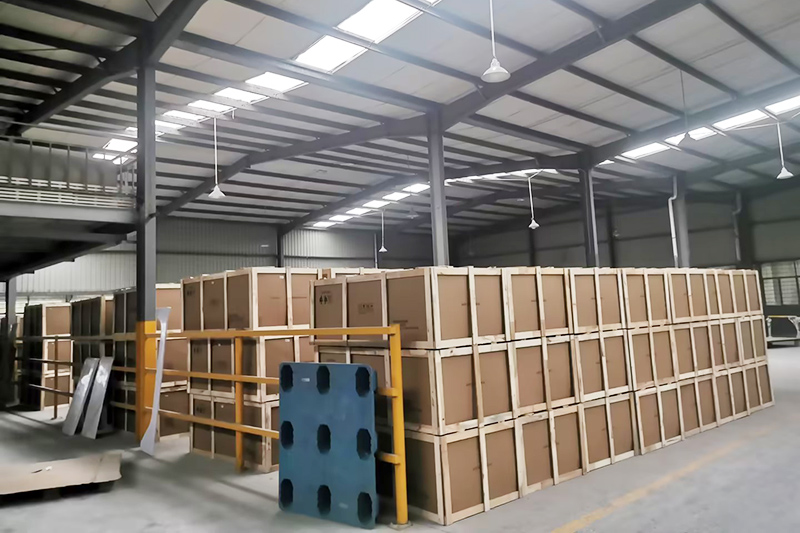
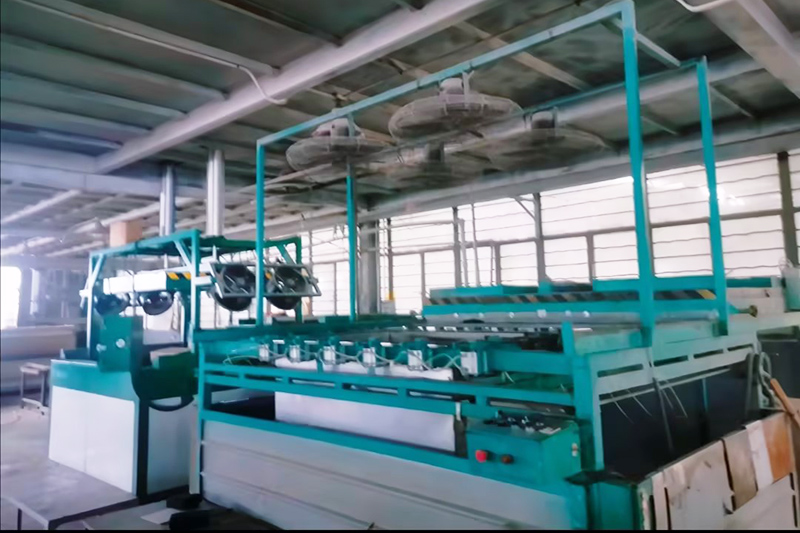
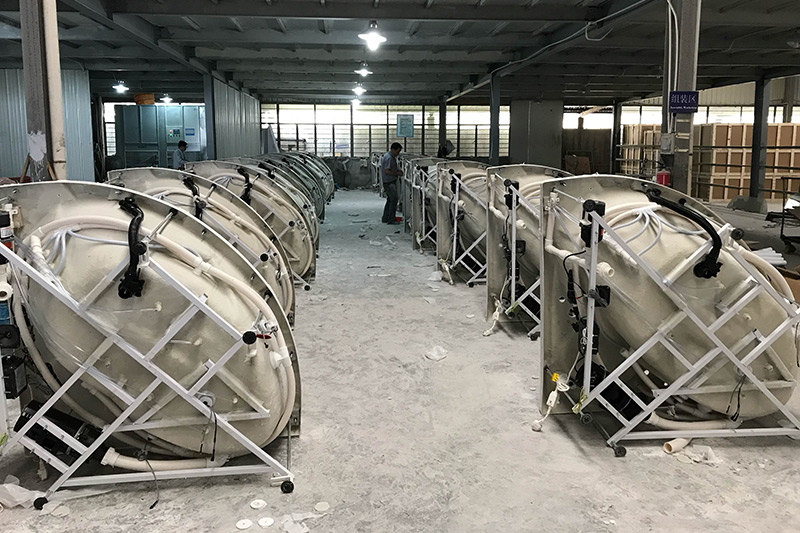
The aluminum components undergo custom surface treatment runs—including electrophoretic deposition, high-durability powder coating, or anodizing—rendering them completely immune to water staining and dynamic scaling. Let's look inside our advanced manufacturing facility:
During the final inspection, each batch of sliding doors undergoes a structured mechanical testing program where 5% of the production run is set up on cyclic test rigs. Here, the sliding and structural hinges are mechanically triggered for thousands of cycles under simulated load, verifying that the rollers remain smooth and the frame remains structurally uncompromised.
Importing structural sanitary ware and heavy-duty sliding doors into the EU, and specifically Italy, requires strict alignment with EN standards and regional building directives. We assist our Milan and broader European clients through our comprehensive regulatory compliance documentation program.
Our logistics and compliance system includes:
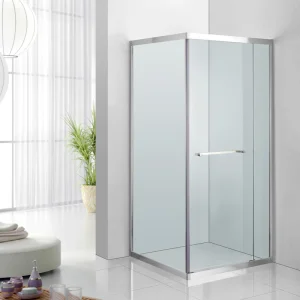
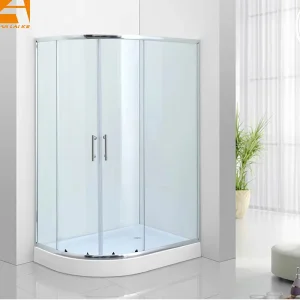
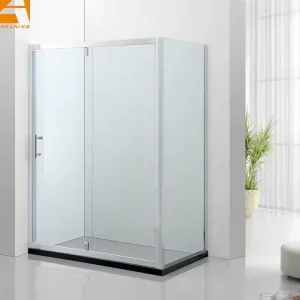
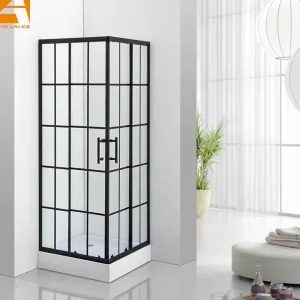
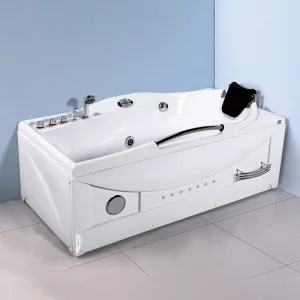
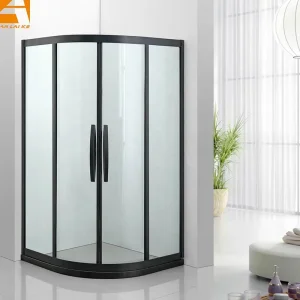
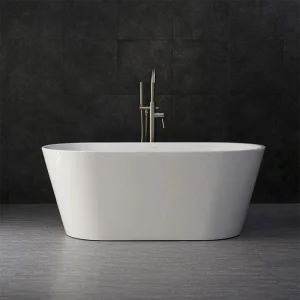
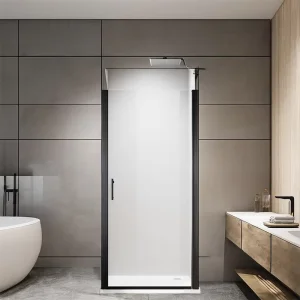
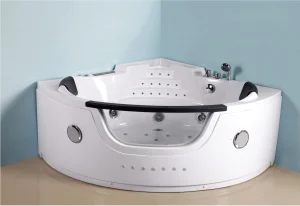
Discover our comprehensive collection of sliding structures, frameless glass systems, and luxury soaking tubs engineered for architectural projects.
 Kaifeng